Noticias y Opiniones
El futuro del hipermercado: reinventar las grandes tiendas para impulsar el crecimiento, la experiencia y el ROIC.


El hipermercado no está desapareciendo. Se está reinventando.
Los principales distribuidores de alimentación están transformando las tiendas de gran formato en plataformas comerciales productivas, orientadas a la experiencia y conectadas digitalmente. El enfoque está pasando de vender más productos en más metros cuadrados a conseguir que cada metro cuadrado sea comercialmente productivo.
Carrefour, E.Leclerc y SSG Food Market demuestran diferentes enfoques. Una planificación del espacio más inteligente, mejores customer journeys y una mayor productividad de las ventas pueden convertir las grandes tiendas en destinos que generen crecimiento, fidelización y ROIC.
El hipermercado del futuro combina experiencias de producto fresco, comidas preparadas, foodservice, descubrimiento, convenience, tecnología y fulfilment omnicanal, creando razones más atractivas para visitar, explorar, comprar, comer, recoger pedidos y regresar.
Este artículo analiza las tendencias y estrategias de los hipermercados que están definiendo 2026–2027 y que se extenderán hacia 2028.
El futuro del hipermercado requiere una estrategia de transformación de las tiendas y de reinvención del formato.
Para los distribuidores, el objetivo es conseguir una mayor afluencia, mejores tasas de conversión, cestas de compra más grandes, mayor fidelización y un mejor retorno sobre el capital invertido.
En el comercio minorista internacional de alimentación, los principales operadores están cuestionando el modelo tradicional de gran formato mediante la reducción del espacio improductivo, el fortalecimiento de la oferta de productos frescos, la introducción de experiencias especializadas, la integración de servicios digitales y la conversión de las tiendas en activos de fulfilment omnicanal.
El objetivo ya no consiste simplemente en vender más productos en más metros cuadrados. Se trata de convertir cada metro cuadrado en una razón más poderosa para visitar, comprar, descubrir, comer, recoger pedidos o regresar. Esto se conseguirá mejorando la experiencia del cliente y desarrollando las capacidades omnicanal y tecnológicas del hipermercado.
Carrefour, E.Leclerc y SSG Food Market demuestran diferentes enfoques de esta transformación: Carrefour combina valor, calidad, bienestar y conveniencia omnicanal; E.Leclerc refuerza su propuesta de valor mediante una renovación flexible y sostenible; mientras que SSG Food Market convierte la compra de alimentación en una experiencia premium de alimentación y lifestyle.
La oportunidad estratégica es clara: rediseñar el hipermercado en torno al comportamiento del cliente, mejorar la productividad de las ventas por metro cuadrado y transformar las grandes tiendas de activos heredados costosos en destinos diferenciados y de alto rendimiento que generen mayor engagement, fidelización y ROIC.
¿Cómo se están reinventando los hipermercados?
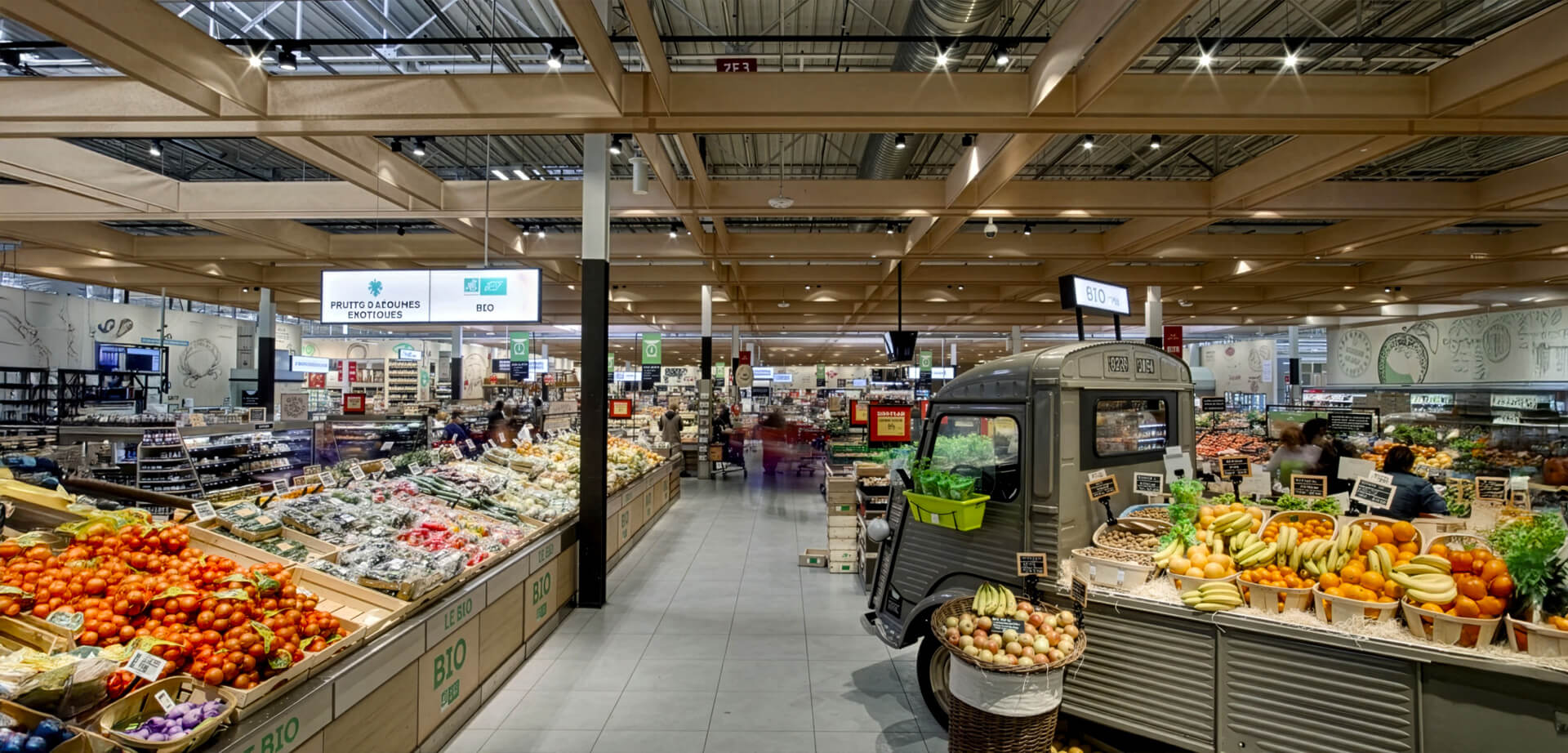
La oportunidad estratégica consiste en hacer que el hipermercado sea más relevante para las nuevas misiones de compra. La experiencia de productos frescos, las comidas preparadas, el foodservice, el descubrimiento, la conveniencia, el valor y el fulfilment digital pueden crear razones para visitar la tienda que un establecimiento local o una cesta de compra online difícilmente pueden reproducir.
Para los distribuidores, el objetivo es conseguir una mayor afluencia, mejores tasas de conversión, cestas de compra más grandes, mayor fidelización y un mejor retorno sobre el capital invertido.
Por qué los hipermercados deben cambiar → tendencias de transformación 2027–2028 → tres modelos de reinvención → planificación basada en misiones del cliente → productividad del espacio → omnicanal + IA → diseño de tienda → ROIC → metodología de CampbellRigg.
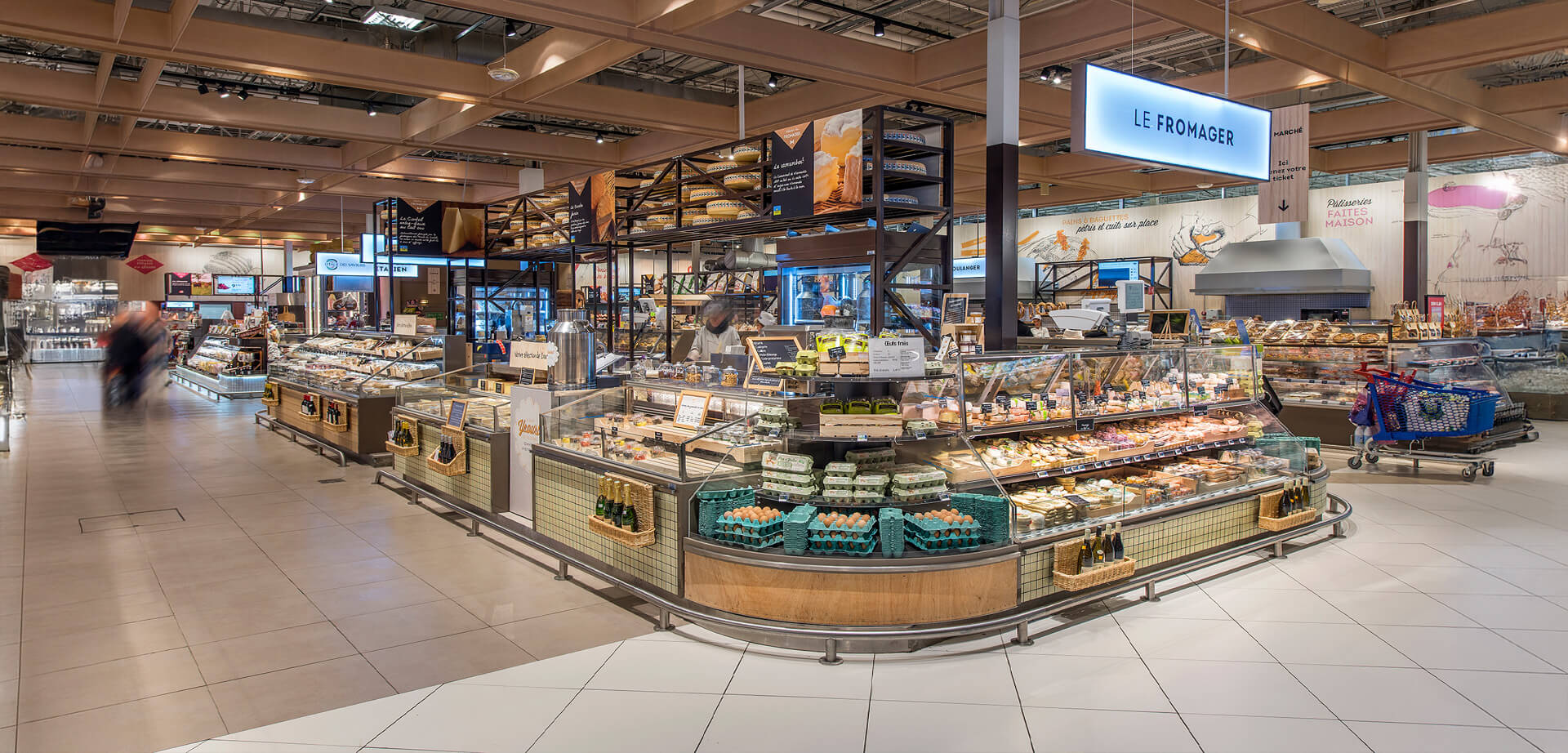
Carrefour hace que el hipermercado sea más productivo mediante la evaluación de las tendencias de retail design para hipermercados en 2026–2027.
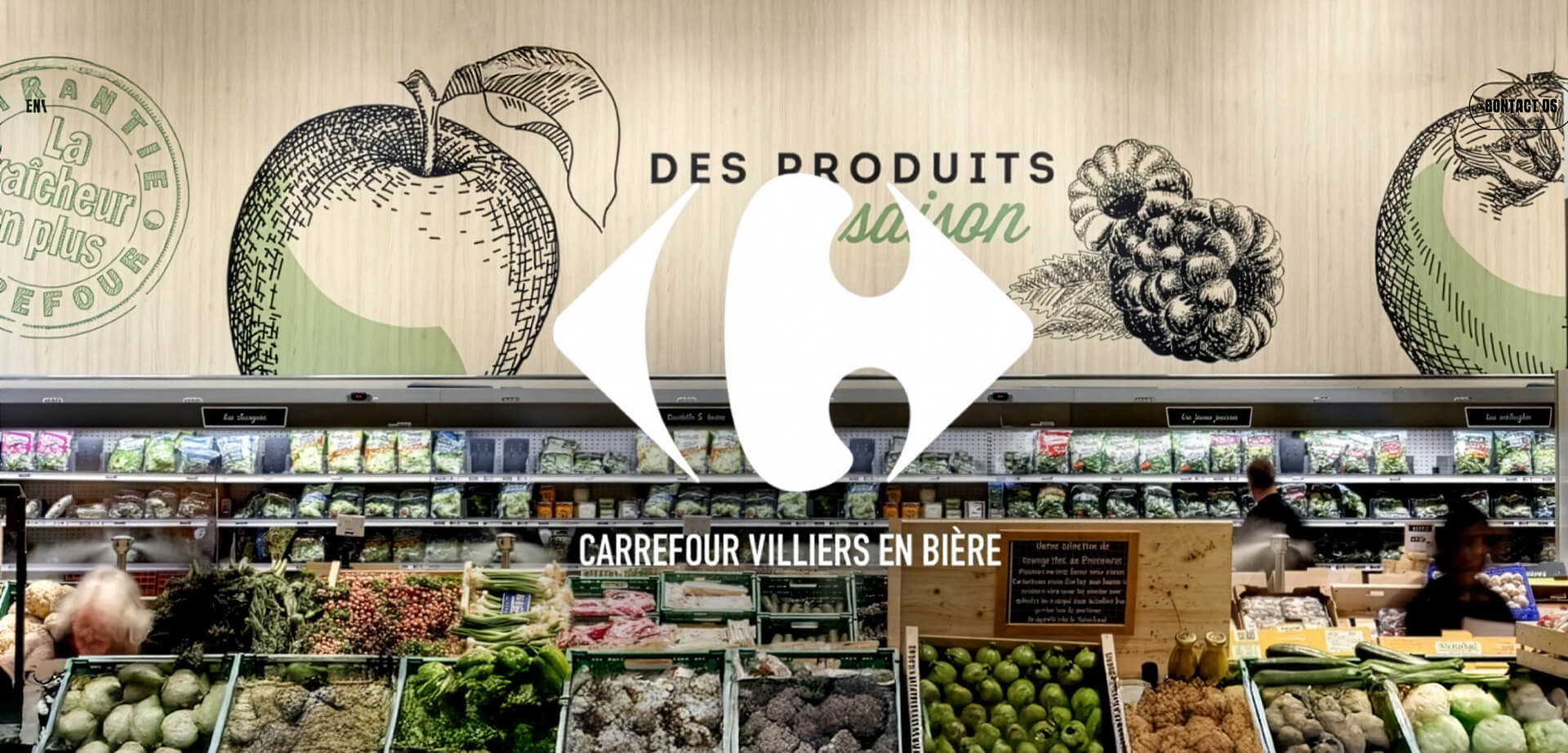
El hipermercado Carrefour de Villiers-en-Bière demuestra cómo una tienda de gran tamaño puede rediseñarse en torno al comprador actual. La tienda, de 26.000 metros cuadrados, cuenta con más de 10.000 referencias, unas ventas anuales de aproximadamente 170 millones de euros y una afluencia anual de alrededor de 4,5 millones de clientes.
La renovación introdujo una distribución más clara que separa las misiones de compra recurrentes y funcionales de recorridos más rápidos y orientados al placer, haciendo que la enorme superficie comercial sea más fácil de recorrer.
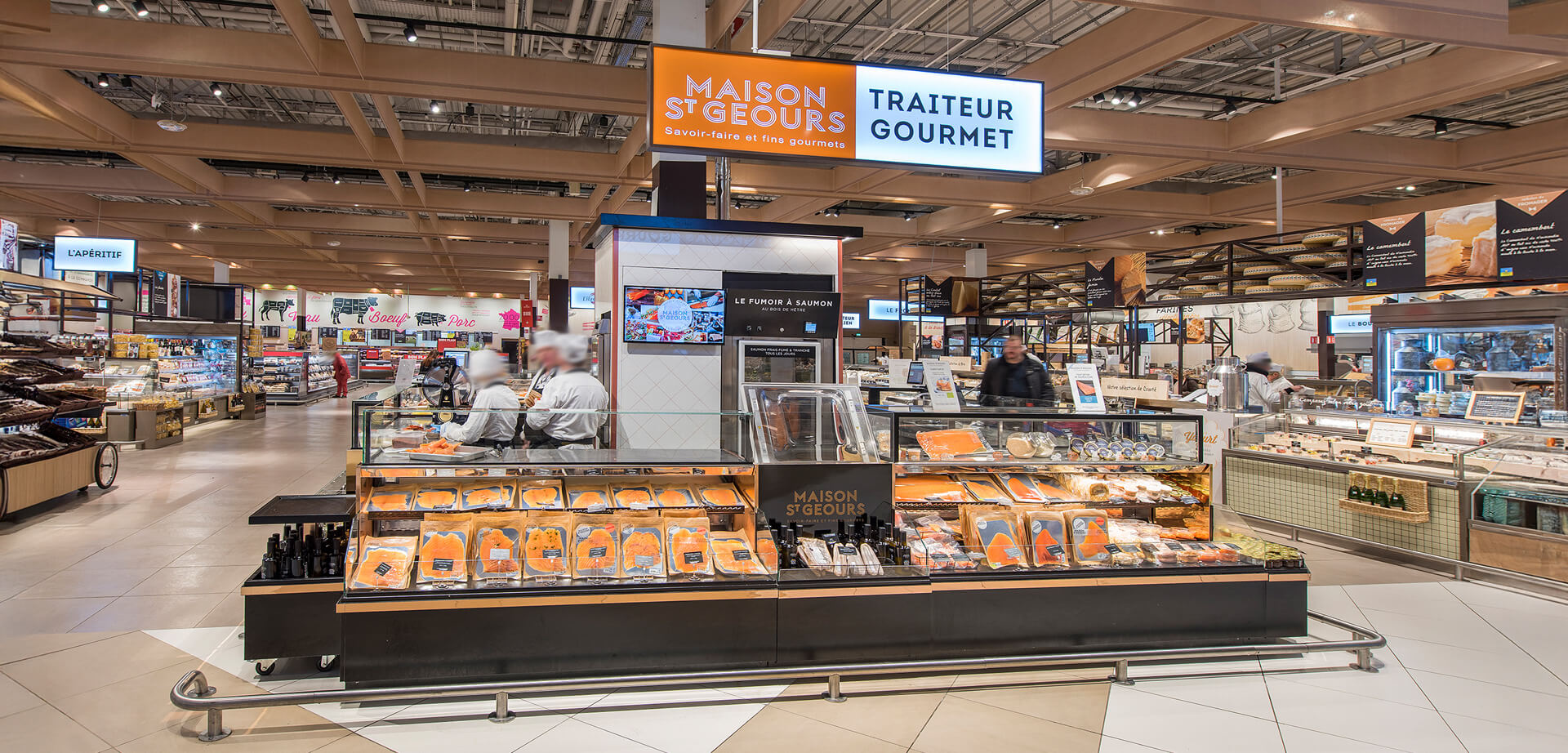
El proyecto tiene como objetivo declarado mejorar el rendimiento en un +20 %, lo que ilustra la ambición comercial que existe detrás de la reinvención de los grandes formatos. Carrefour también integra click and collect, entrega a domicilio y otros servicios, reforzando el papel del hipermercado tanto como destino de compras como activo de fulfilment omnicanal. La oferta actual de Villiers-en-Bière incluye click and collect, entrega y servicios de traiteur online (alimentos preparados listos para consumir o servir).
A continuación, enumeramos las cuestiones clave que deberían abordarse en cada etapa del desarrollo:
- Productividad del espacio
- Experiencia de productos frescos
- Retail orientado a la experiencia
- Premiumización
- Fulfilment omnicanal
- Personalización impulsada por IA
- Planificación de tiendas basada en misiones
- Bienestar y foodservice
- Investigación de localización
- Optimización del formato orientada al ROIC
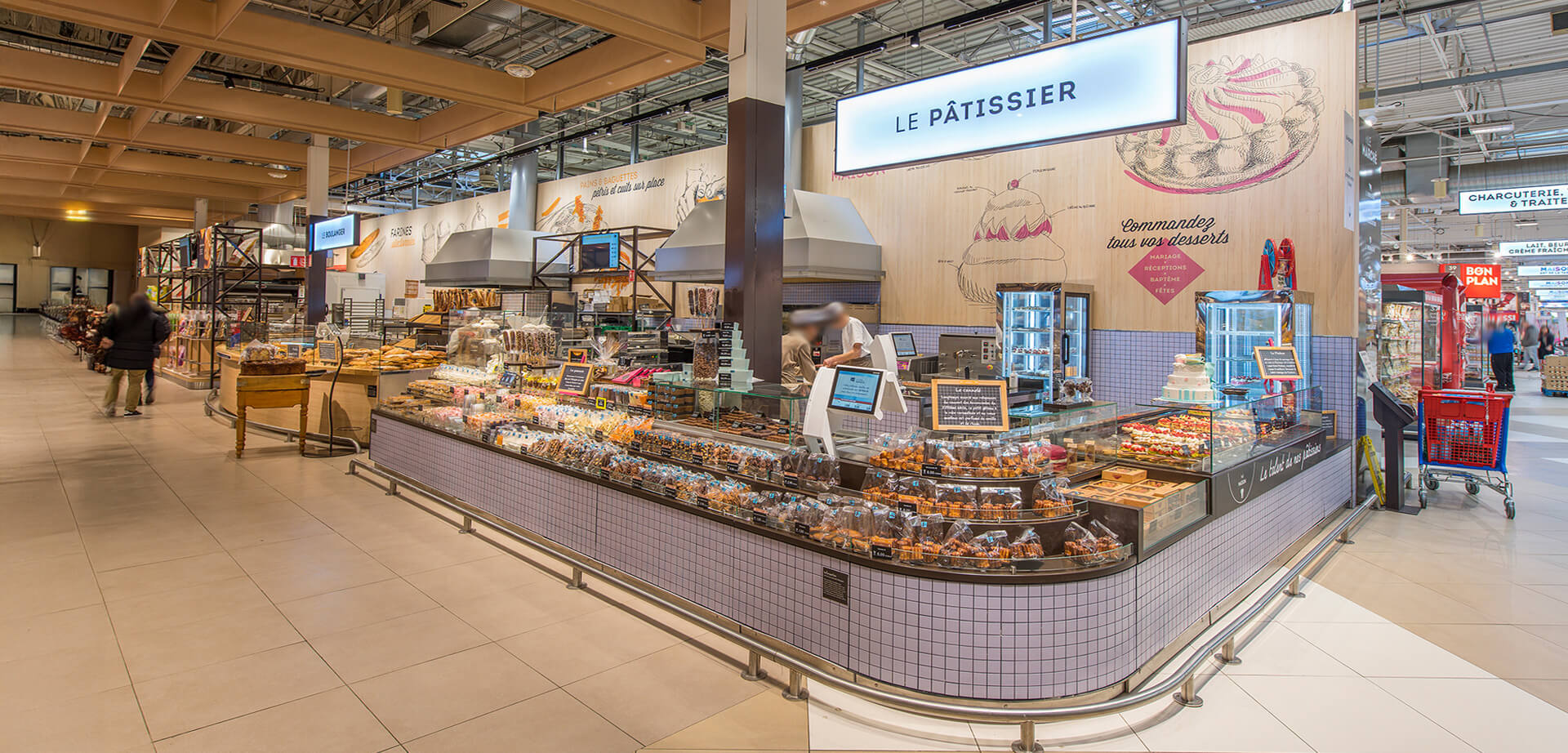
El público objetivo de Carrefour es amplio: familias, hogares del mercado general y consumidores sensibles al precio, así como clientes que combinan la compra semanal con necesidades inmediatas de alimentación, conveniencia y servicios. Su posicionamiento es accesible y dirigido al mercado masivo, en lugar de lujo, utilizando variedad, promociones, productos frescos y conveniencia para crear valor.
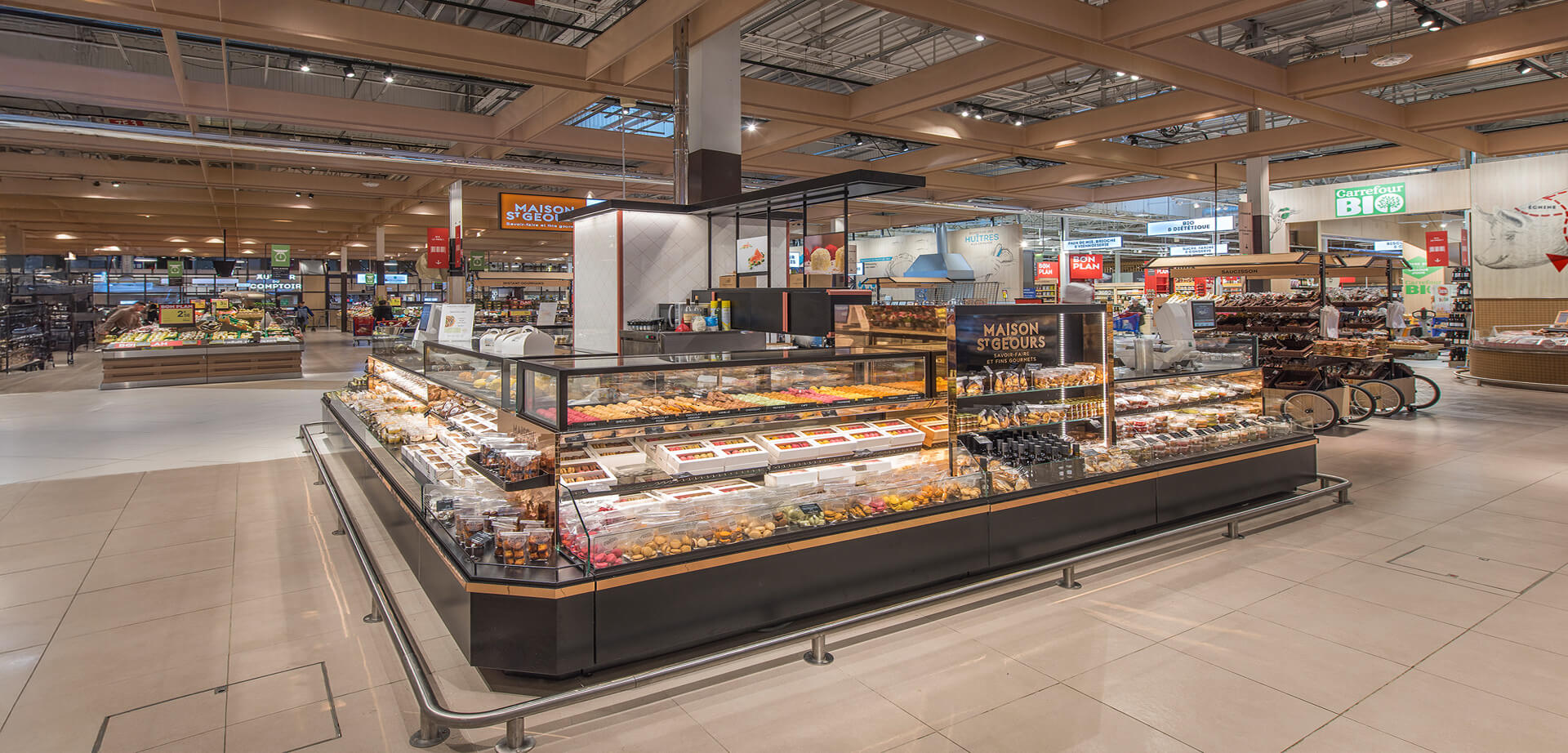
El USP de Carrefour combina calidad accesible y alimentación premium con bienestar, descubrimiento y experiencia.
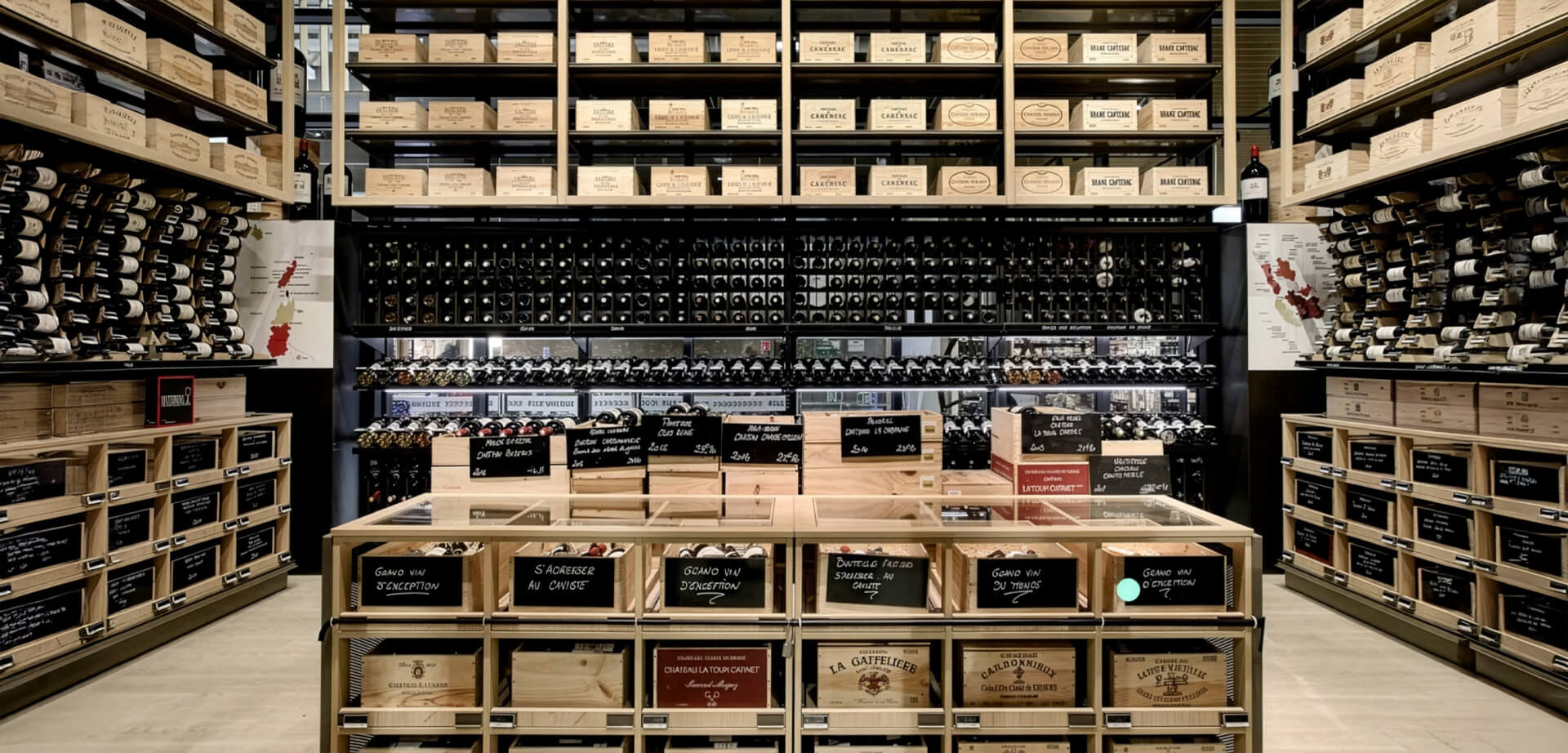
Su propuesta reúne productos ecológicos seleccionados y de abastecimiento responsable, alimentos frescos preparados, cafeterías, salud y bienestar, belleza, marcas emergentes y productos de marca propia diferenciados. Al extenderse más allá del retail alimentario tradicional hacia la cultura gastronómica, la conveniencia y el lifestyle, Carrefour crea un destino más atractivo que refuerza la diferenciación, la fidelización y el valor de la cesta.
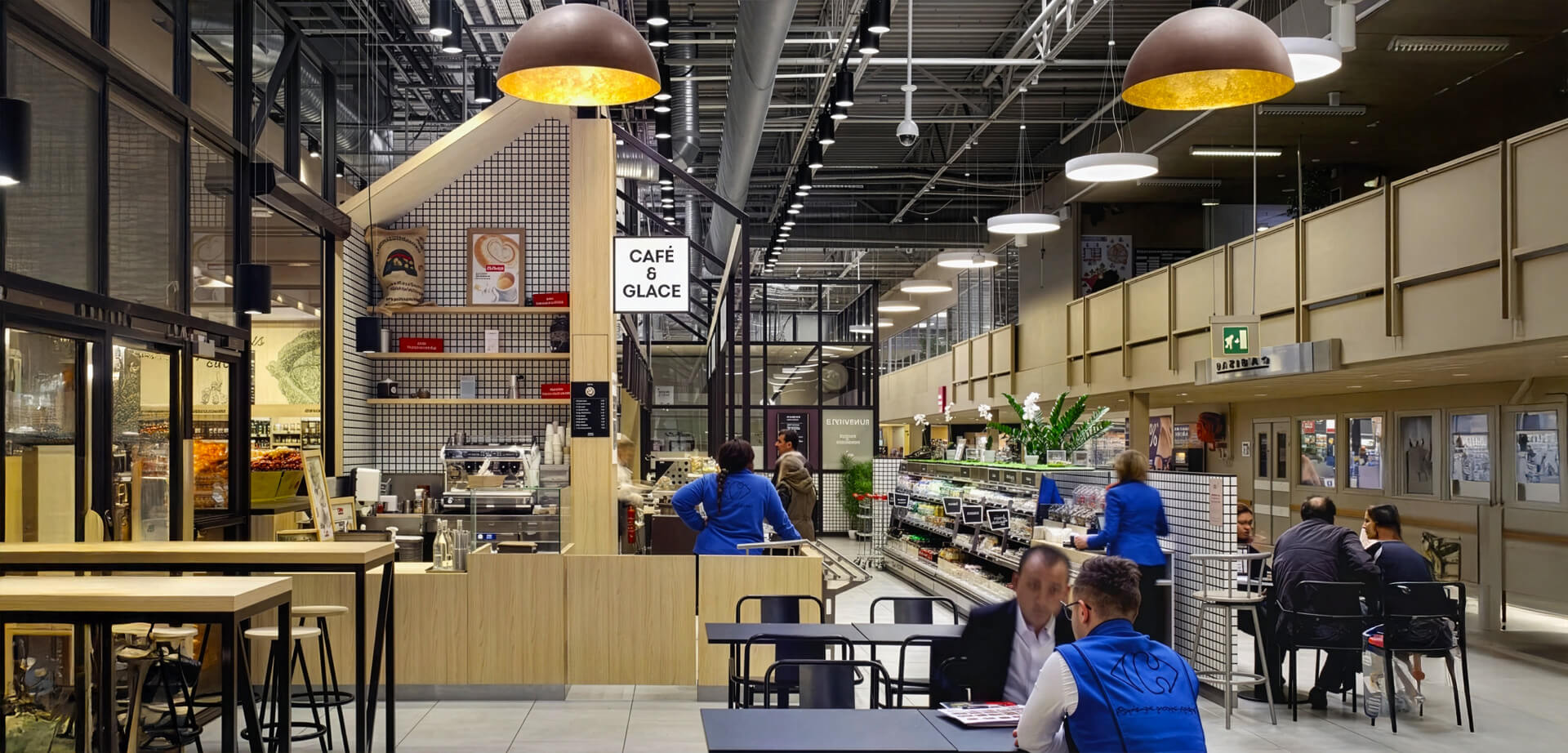
El hipermercado Carrefour de Villiers-en-Bière se diferencia al combinar precios competitivos con un customer journey más amplio y experiencial. Los clientes pueden descubrir productos de bienestar y nuevas marcas, comprar comidas preparadas o zumos frescos, hacer una pausa en las cafeterías y participar en experiencias orientadas a las redes sociales.
El precio es una parte importante del posicionamiento.
El precio sigue siendo un elemento central de la propuesta. A diferencia de los discounters como Lidl y Aldi, cuyos recorridos se centran en precios bajos y compras eficientes, y de hipermercados tradicionales como E.Leclerc, donde predominan la amplitud del surtido y la competitividad de precios, Carrefour añade descubrimiento, foodservice y experiencias de lifestyle sin abandonar el valor.
Los alimentos preparados, los zumos frescos y los smoothies pueden posicionarse por debajo de los precios habituales de los servicios especializados o premium de foodservice, haciendo que los productos experienciales sean accesibles en lugar de convertirse en un lujo. El resultado es una combinación diferenciada de precios competitivos, descubrimiento asequible y experiencias orientadas al lifestyle.
Por tanto, los clientes no se limitan a comprar alimentos; participan en una propuesta contemporánea de alimentación y bienestar, mientras Carrefour captura ocasiones adicionales de consumo, mayor engagement y un potencial incremento del valor de la cesta.
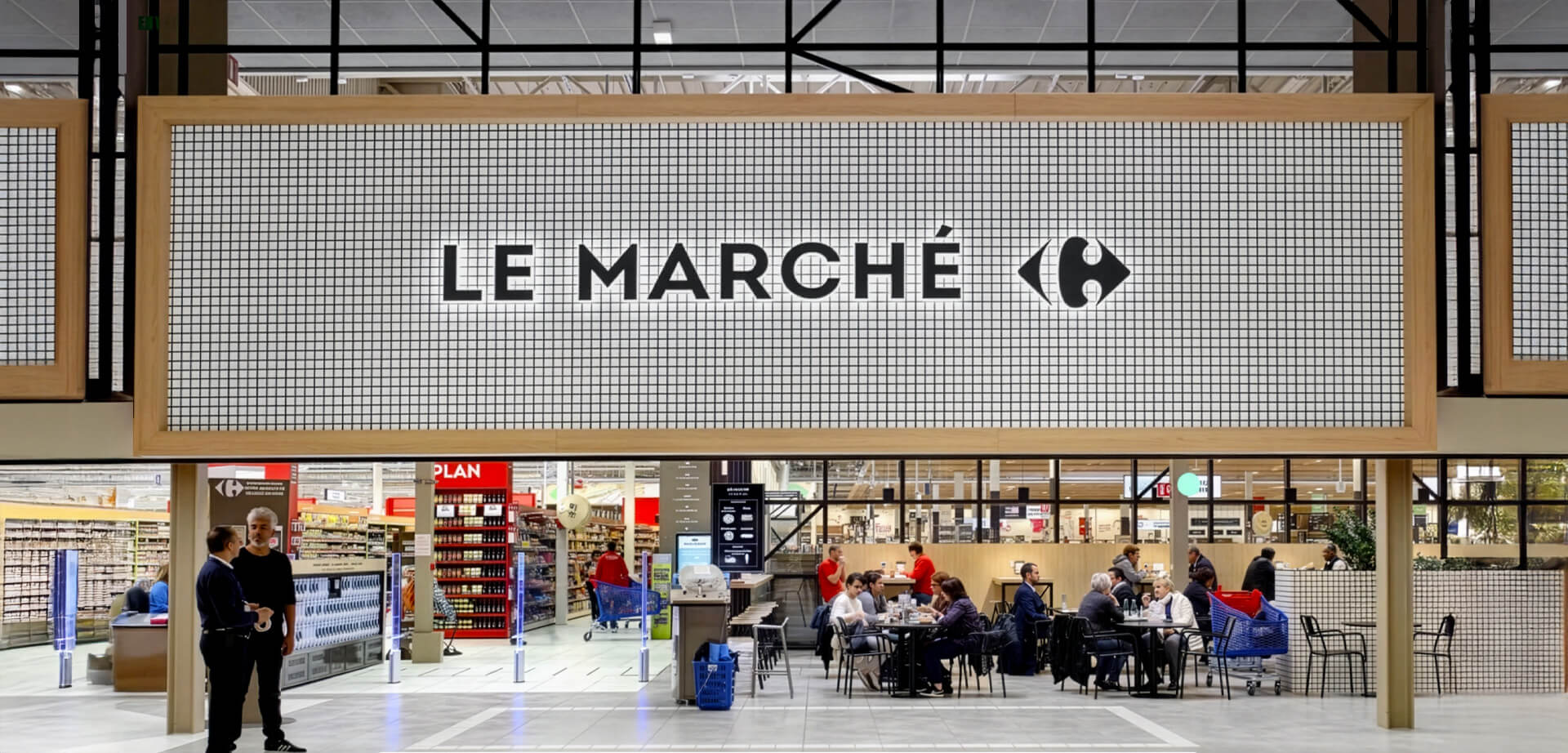
Carrefour: Calidad, bienestar y propósito.
Carrefour adopta un enfoque de diferenciación basado en la calidad y el propósito, combinando productos naturales y ecológicos, abastecimiento responsable, alimentos frescos, comidas preparadas y bienestar con estándares diseñados para hacer tangibles estos compromisos.
En lugar de depender principalmente de la publicidad, Carrefour utiliza la calidad del producto, el abastecimiento, la frescura y la transparencia como pruebas físicas de su promesa de marca. Esto ayuda a diferenciarlo de los discounters centrados en el precio y de los hipermercados convencionales, donde la calidad y la sostenibilidad pueden ocupar un papel menos central.
El resultado es una propuesta en la que la calidad, el bienestar y el propósito están integrados en todo el customer journey, desde la selección de productos y el merchandising hasta el foodservice, el packaging y la comunicación en tienda.
Carrefour = Hace que el hipermercado sea más experiencial y omnicanal.
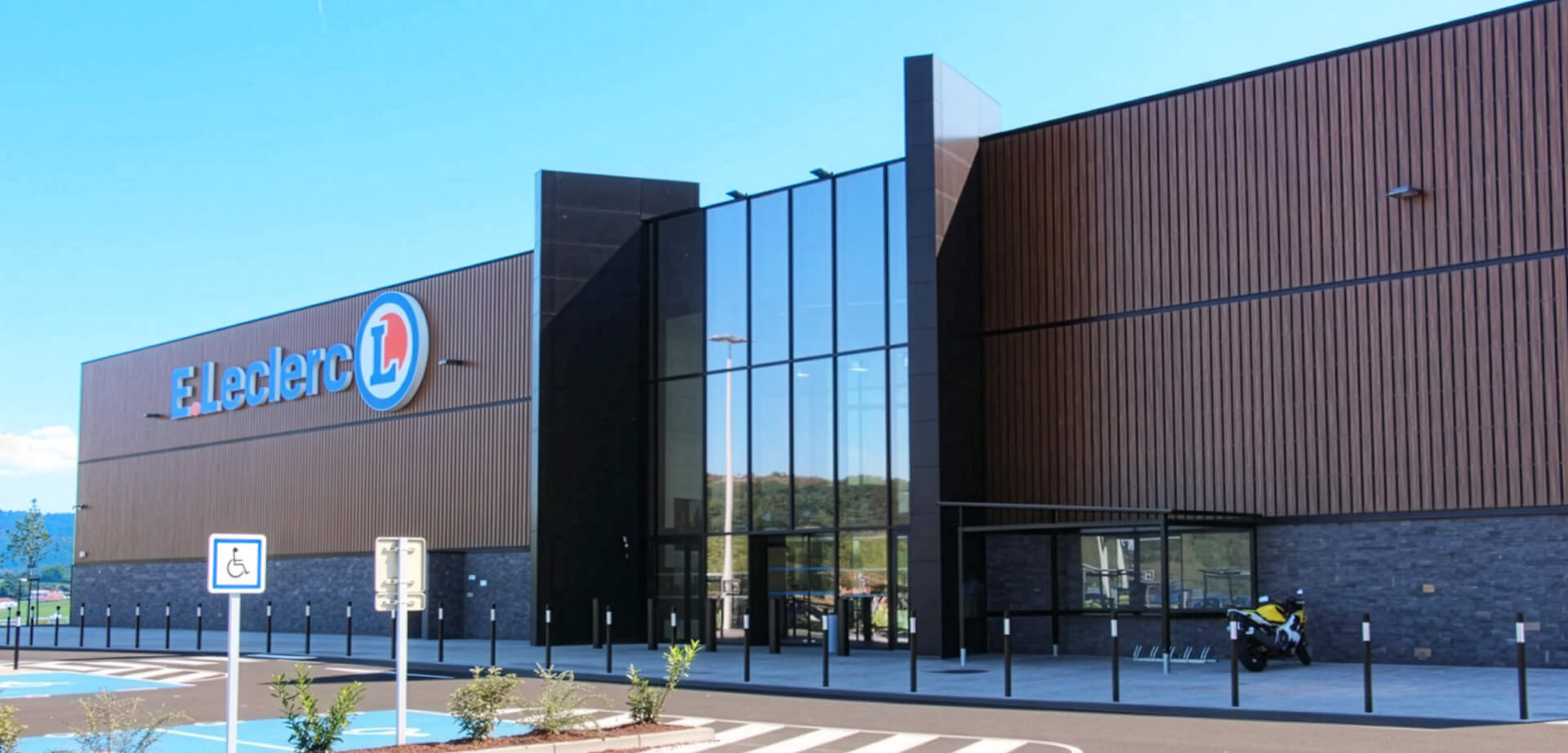
E.Leclerc apuesta por una renovación flexible, modular y sostenible.
El hipermercado de La Roche-sur-Yon ilustra un tercer modelo: modernización orientada al valor. Tras una renovación integral de tres años, la tienda de 6.650 m² reabrió con un diseño evolutivo, modular y medioambientalmente responsable. La luz natural, una distribución más clara, una mejor presentación de los productos frescos, la conveniencia y un entorno orientado a la experiencia crean un destino de compra más atractivo y adaptable.
El proyecto combina explícitamente la renovación con el posicionamiento de precios de E.Leclerc: «a precios E.Leclerc».
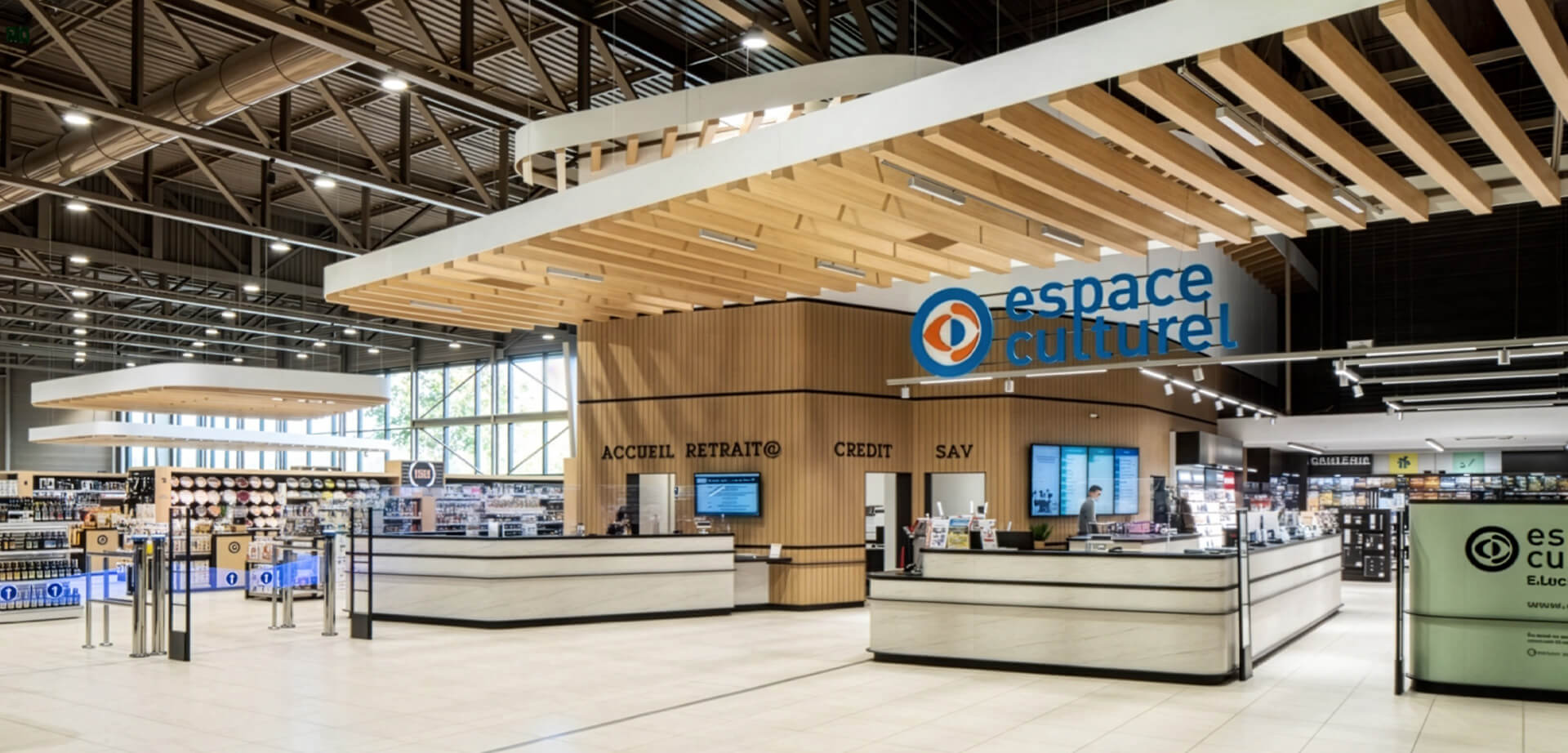
El proyecto estableció un ambicioso objetivo de crecimiento del +33 % en cinco años. Aunque no se ha cuantificado públicamente ningún incremento específico de tráfico o ventas like-for-like, el objetivo demuestra el potencial comercial de combinar una mejor experiencia del cliente con una planificación de tienda más productiva.
E.Leclerc = elección + precio + poder adquisitivo + renovación modular.
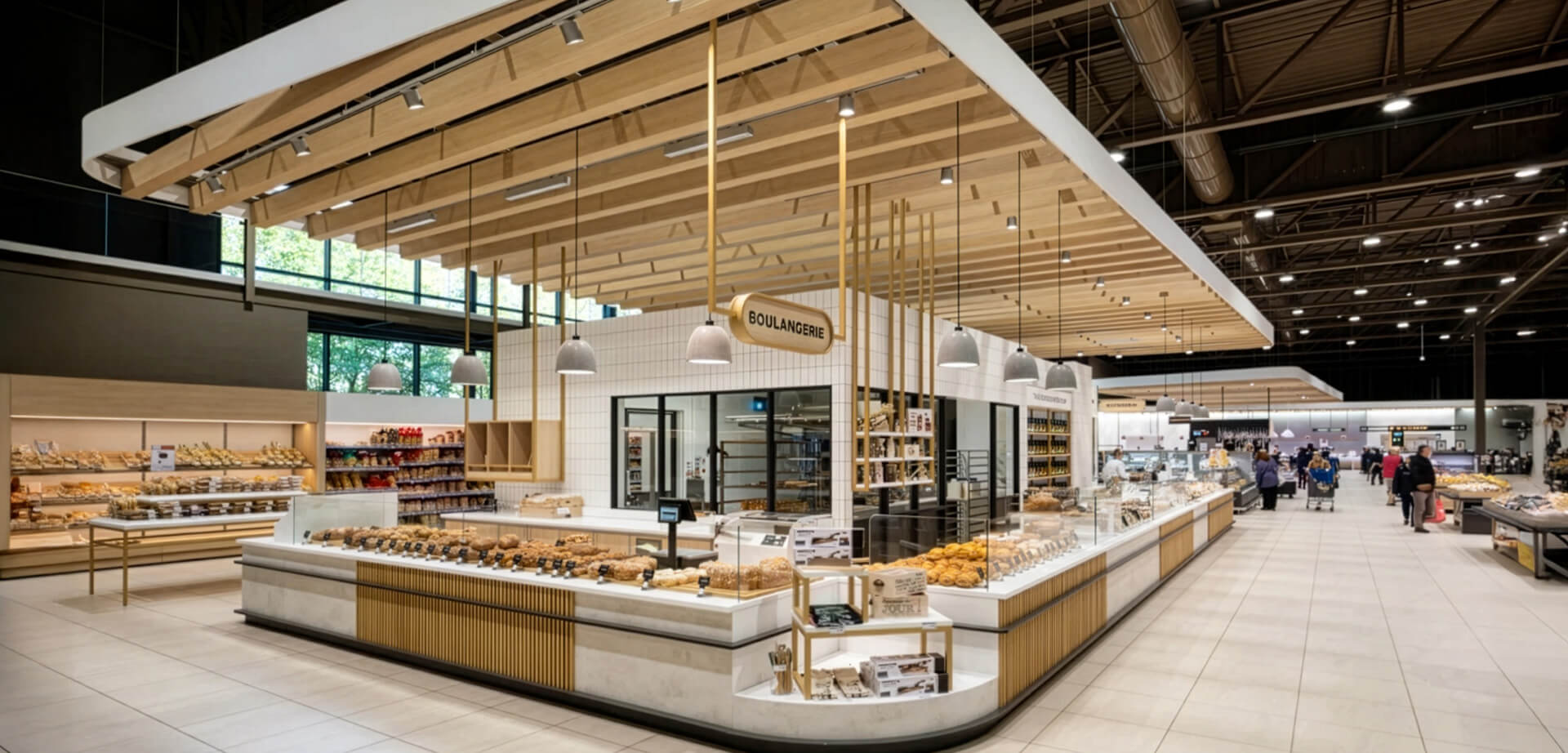
Su USP se basa en liderazgo en precios, poder adquisitivo y valor para el cliente, mientras que Carrefour combina valor con calidad, bienestar, abastecimiento responsable y experiencia.
Su amplio público sensible al precio se diferencia mediante una fuerte imagen de precios y un modelo de operadores independientes que permite adaptarse localmente.
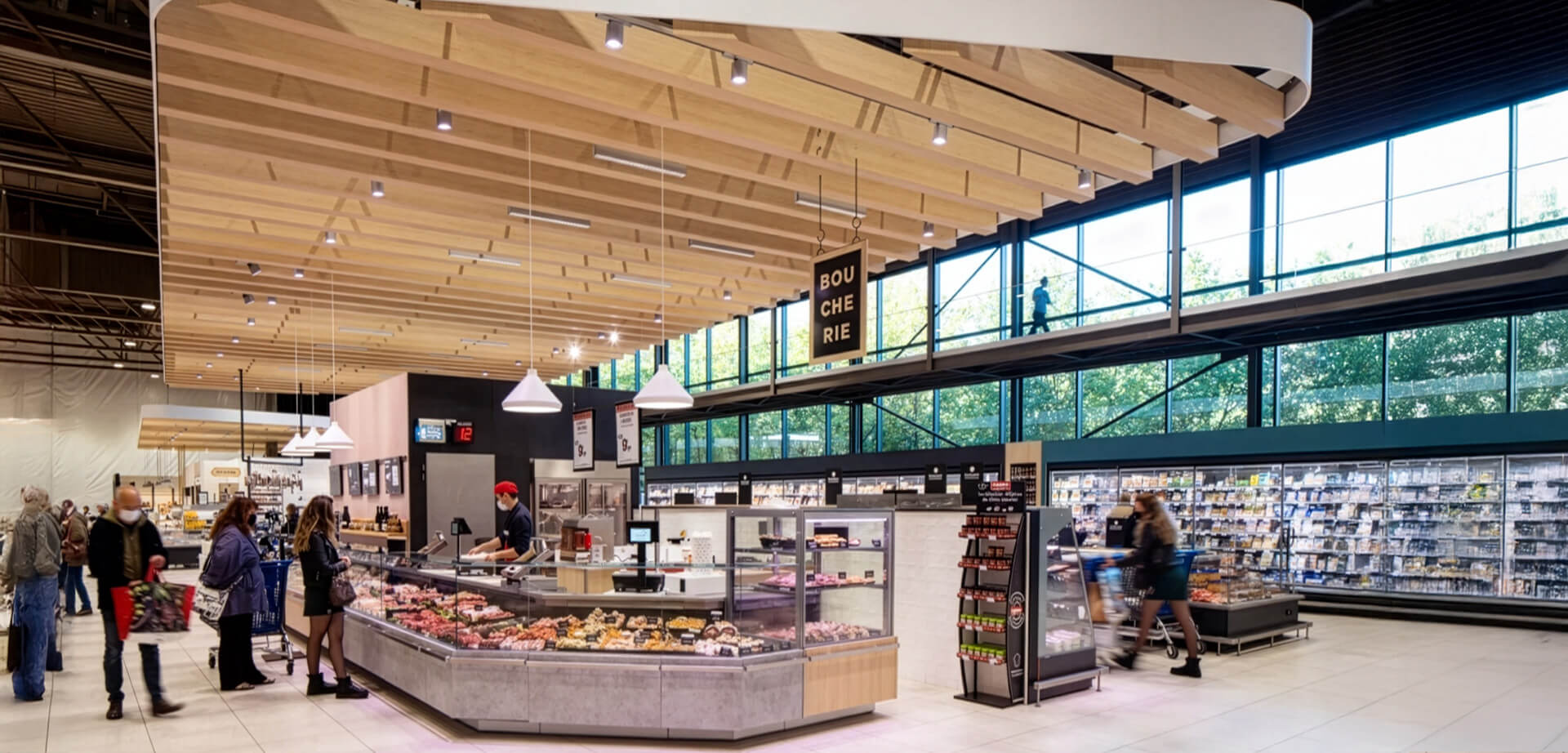
Su USP se basa en liderazgo en precios, poder adquisitivo y valor para el cliente, mientras que Carrefour combina valor con calidad, bienestar, abastecimiento responsable y experiencia.
Su amplio público sensible al precio se diferencia mediante una fuerte imagen de precios y un modelo de operadores independientes que permite adaptarse localmente.
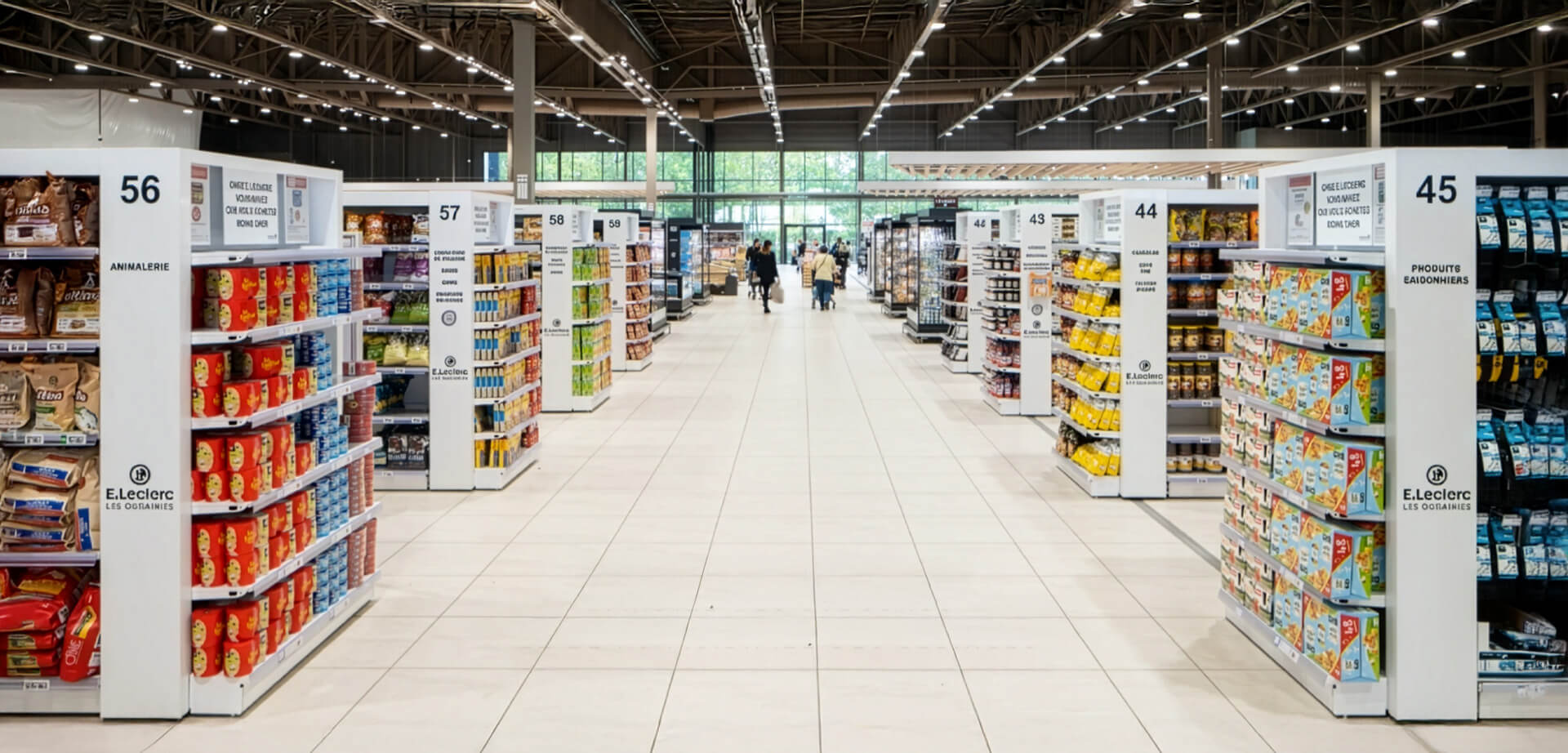
La fortaleza competitiva de E.Leclerc reside en su capacidad para ofrecer una propuesta muy amplia de supermercado e hipermercado a precios altamente competitivos, respaldada por sólidas gamas de marca propia, marcas nacionales, productos frescos y una oferta digital y omnicanal cada vez más sofisticada.
La diferenciación de Carrefour está más orientada a la marca y al propósito. Conecta la alimentación con productos ecológicos y naturales, abastecimiento responsable, frescura, alimentos preparados, salud y bienestar, utilizando sus estándares de calidad y compromisos de sostenibilidad para hacer tangible la propuesta en tienda.
La diferencia puede resumirse de la siguiente manera:
Carrefour = Hace que el hipermercado sea más experiencial y omnicanal.
E.Leclerc = Hace que el hipermercado sea más productivo y orientado al valor.
Esto genera diferentes customer journeys.
E.Leclerc anima a los compradores a comparar, seleccionar y maximizar el valor dentro de un amplio surtido. Carrefour busca añadir descubrimiento, confianza y relevancia de lifestyle a la misión de compra, proporcionando a los clientes razones para explorar más allá de su compra de alimentación planificada.
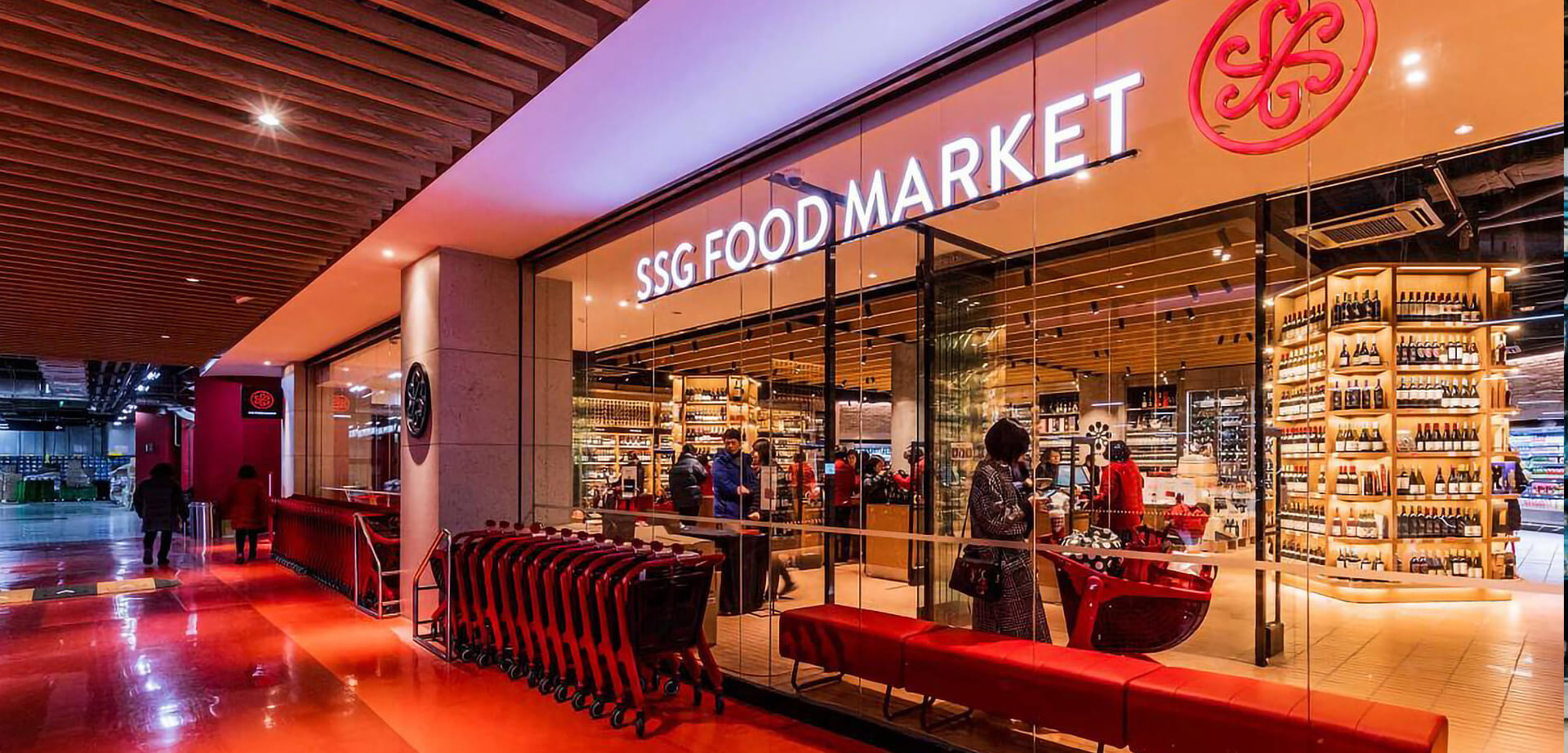
SSG Food Market: el hipermercado se convierte en un destino de lifestyle.
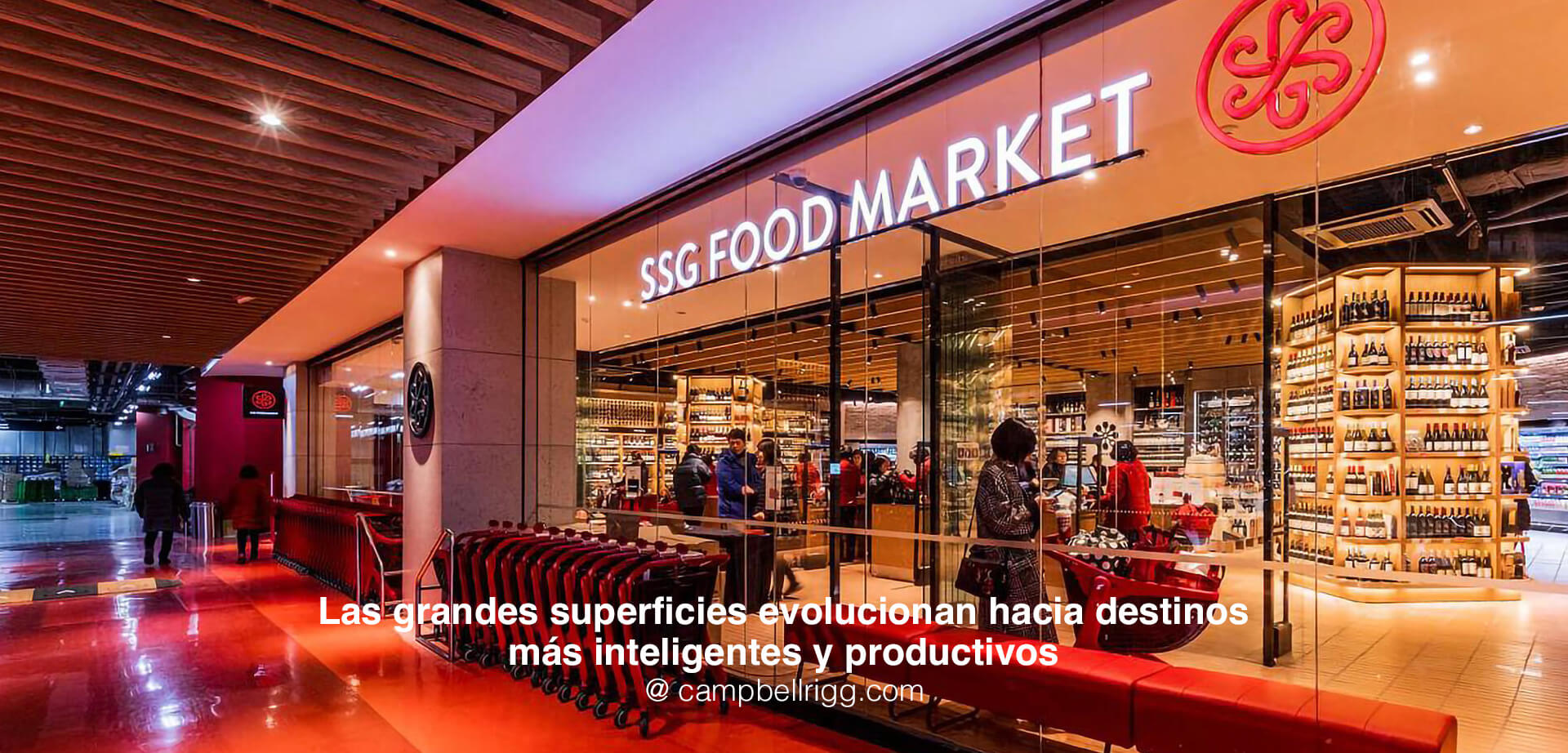
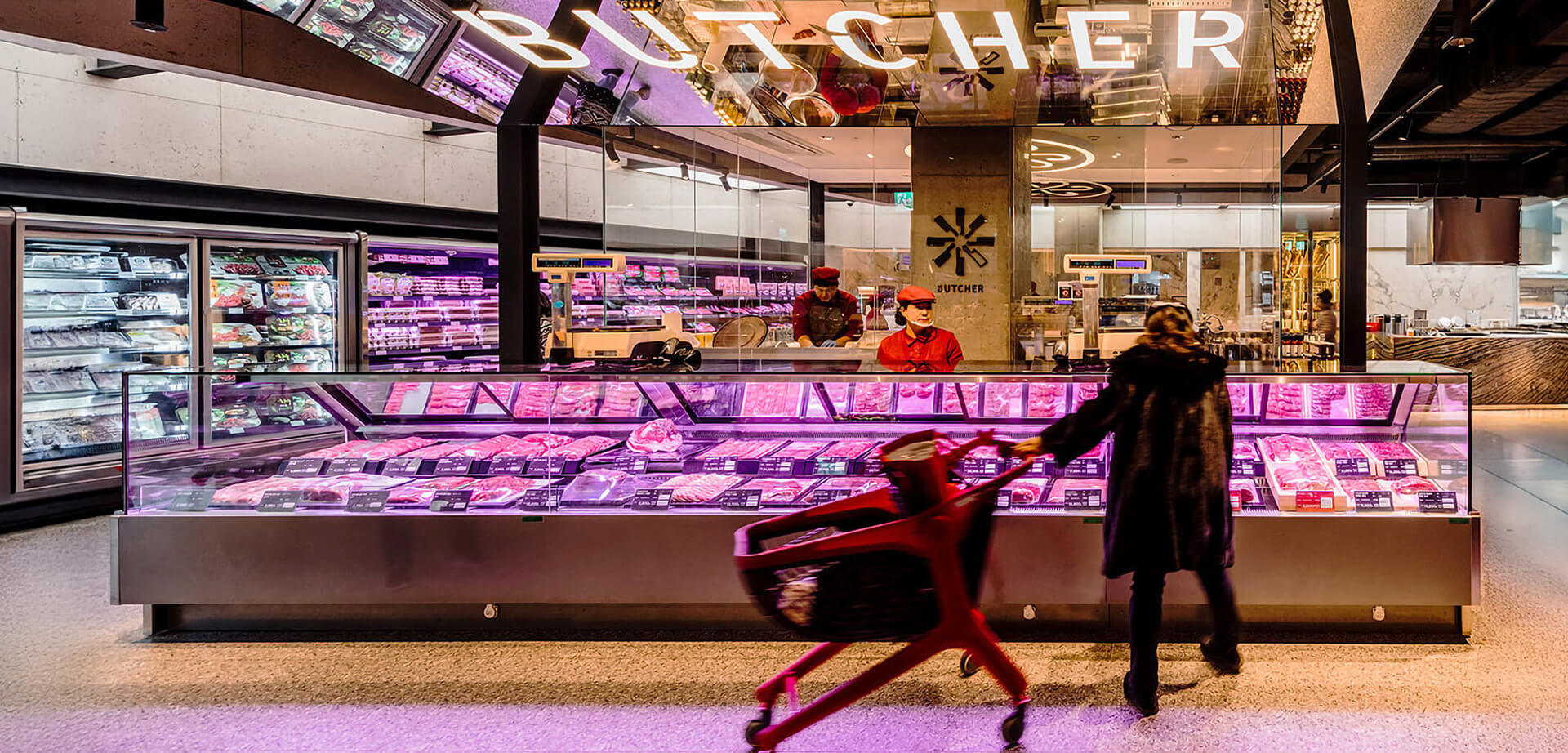
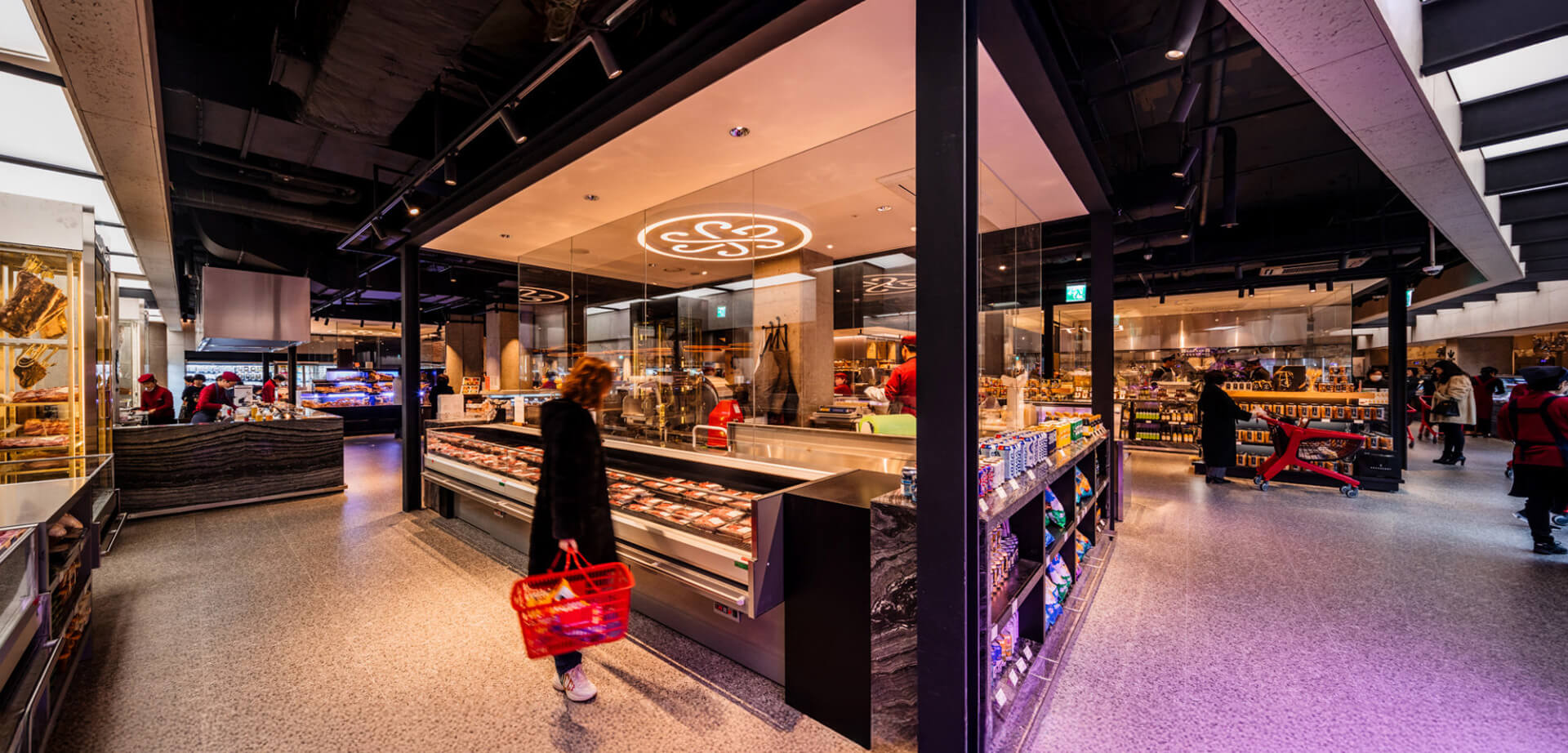
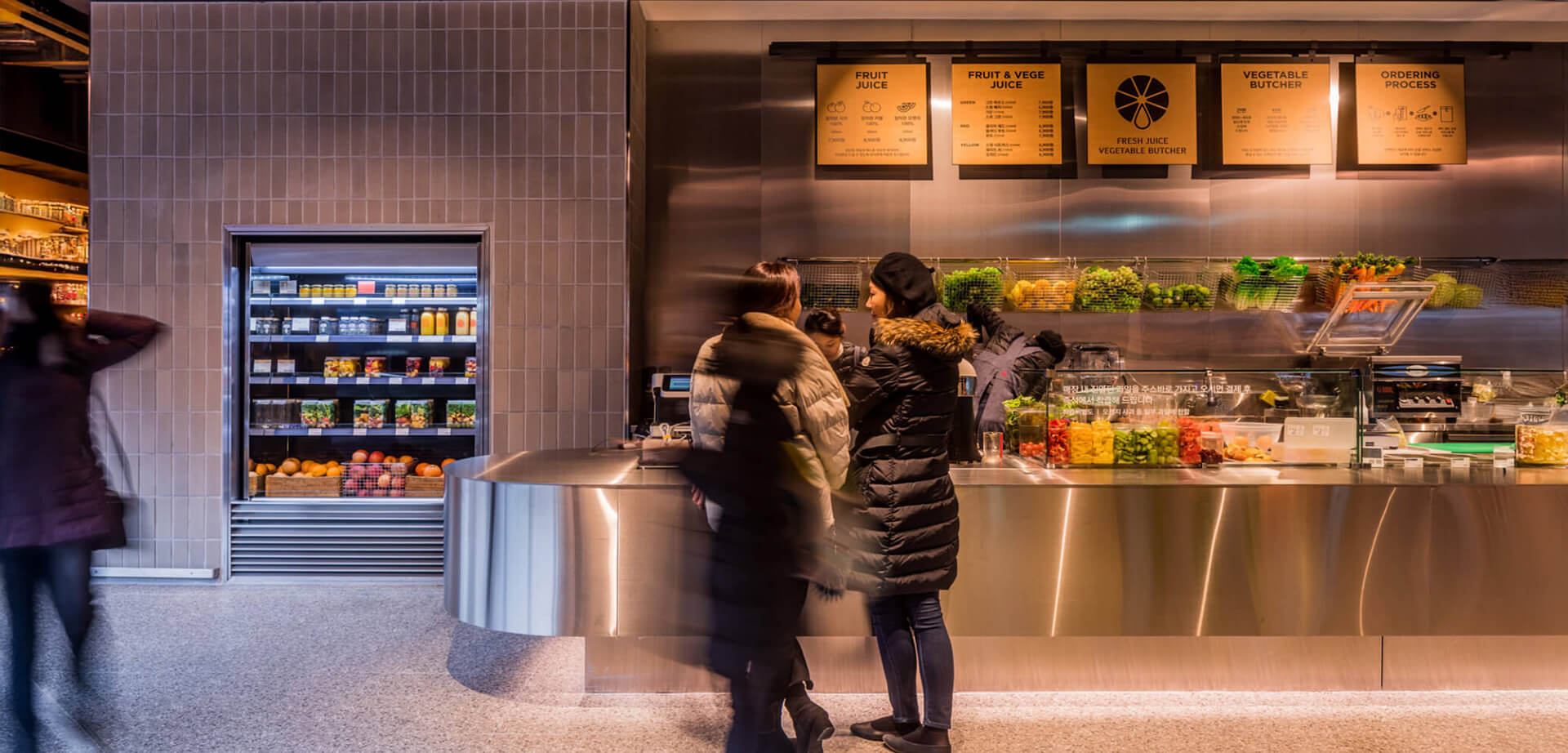
SSG Food Market, en Corea del Sur, muestra otra vía de reinvención: convertir la compra de alimentación en una experiencia premium de alimentación y lifestyle. Su tienda de Cheongdam combina alimentación seleccionada, productos frescos, surtidos especializados y foodservice, creando un destino que va más allá del retail convencional de supermercados.
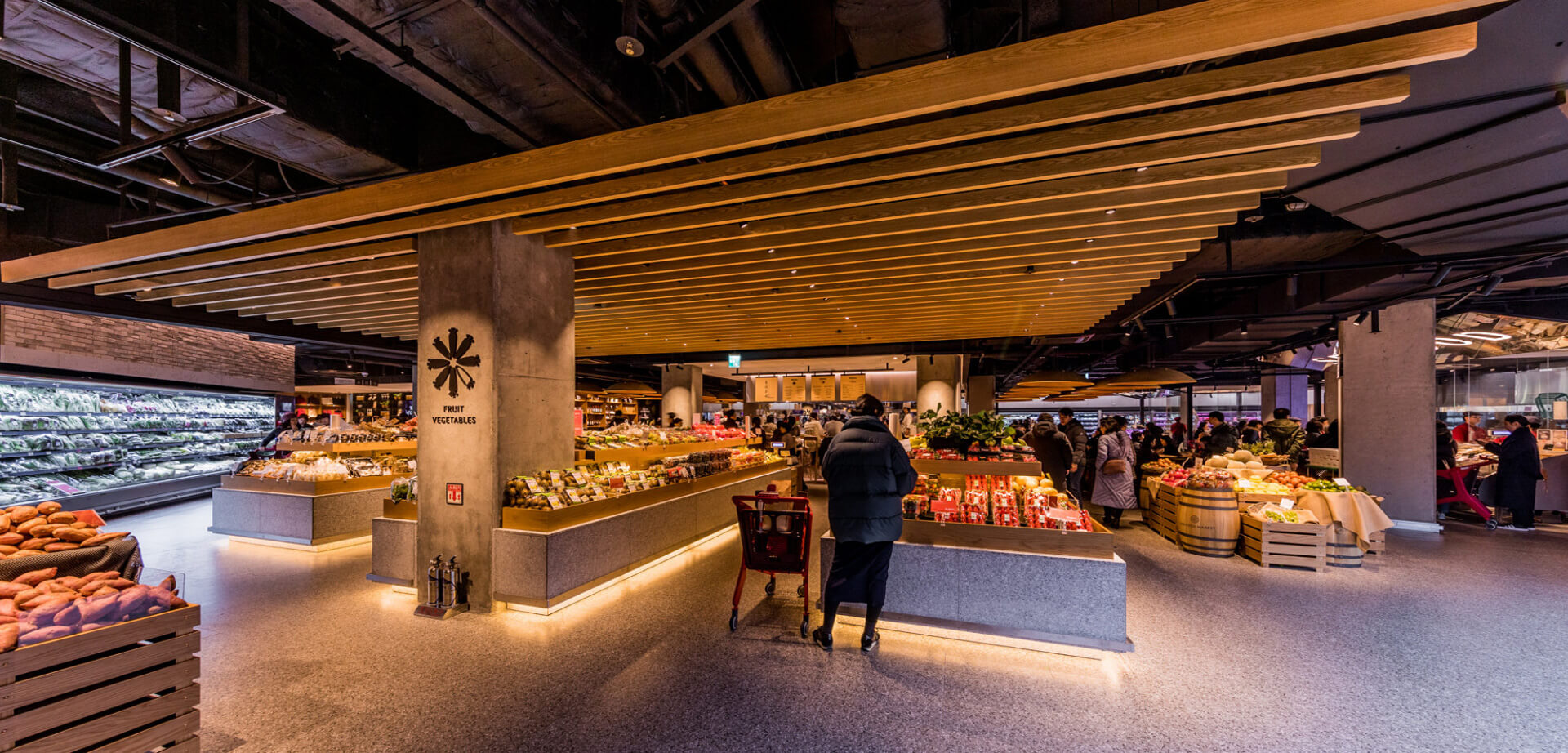
SSG Food Market adopta un enfoque muy diferente: la premiumización. Sus ventas crecieron un 153,9 % interanual en 2013 y un 23,3 % en 2014.
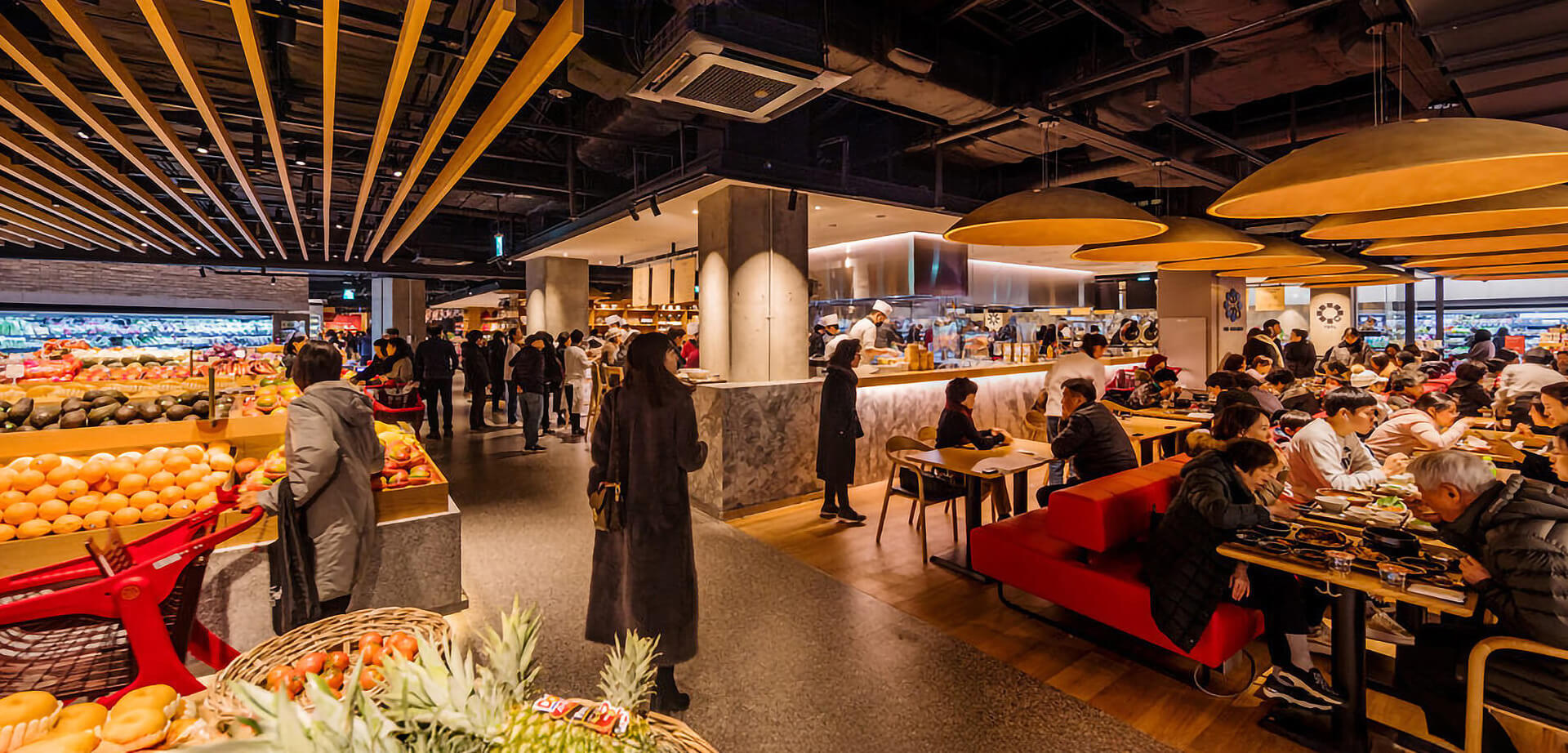
SSG Food Market puede diferenciarse yendo más allá de la misión tradicional del supermercado para crear un destino de alimentación y lifestyle cuidadosamente seleccionado. Su USP combina productos premium y emergentes, alimentos frescos y preparados, propuestas diferenciadas de foodservice, cafeterías y espacios sociales con bienestar, conveniencia y merchandising experiencial.
En lugar de competir principalmente por precio, como E.Leclerc, o mediante la combinación más amplia de valor, calidad y propósito de Carrefour, SSG puede competir a través de la curación, el descubrimiento, el servicio y la experiencia.
El customer journey deja de centrarse simplemente en completar una compra de alimentación y pasa a centrarse más en descubrir nuevos productos, comer, socializar, explorar y regresar para vivir experiencias memorables. Esto genera un mayor engagement emocional y proporciona a SSG Food Market una identidad diferenciada, posicionando el supermercado como un destino gastronómico contemporáneo y no simplemente como un lugar donde comprar alimentos.
Tres modelos de reinvención del hipermercado
Carrefour = Hace que el hipermercado sea más experiencial y omnicanal.
E.Leclerc = Hace que el hipermercado sea más productivo y orientado al valor.
SSG Food Market = Convierte la alimentación premium, el lifestyle y el descubrimiento en el centro de la experiencia.
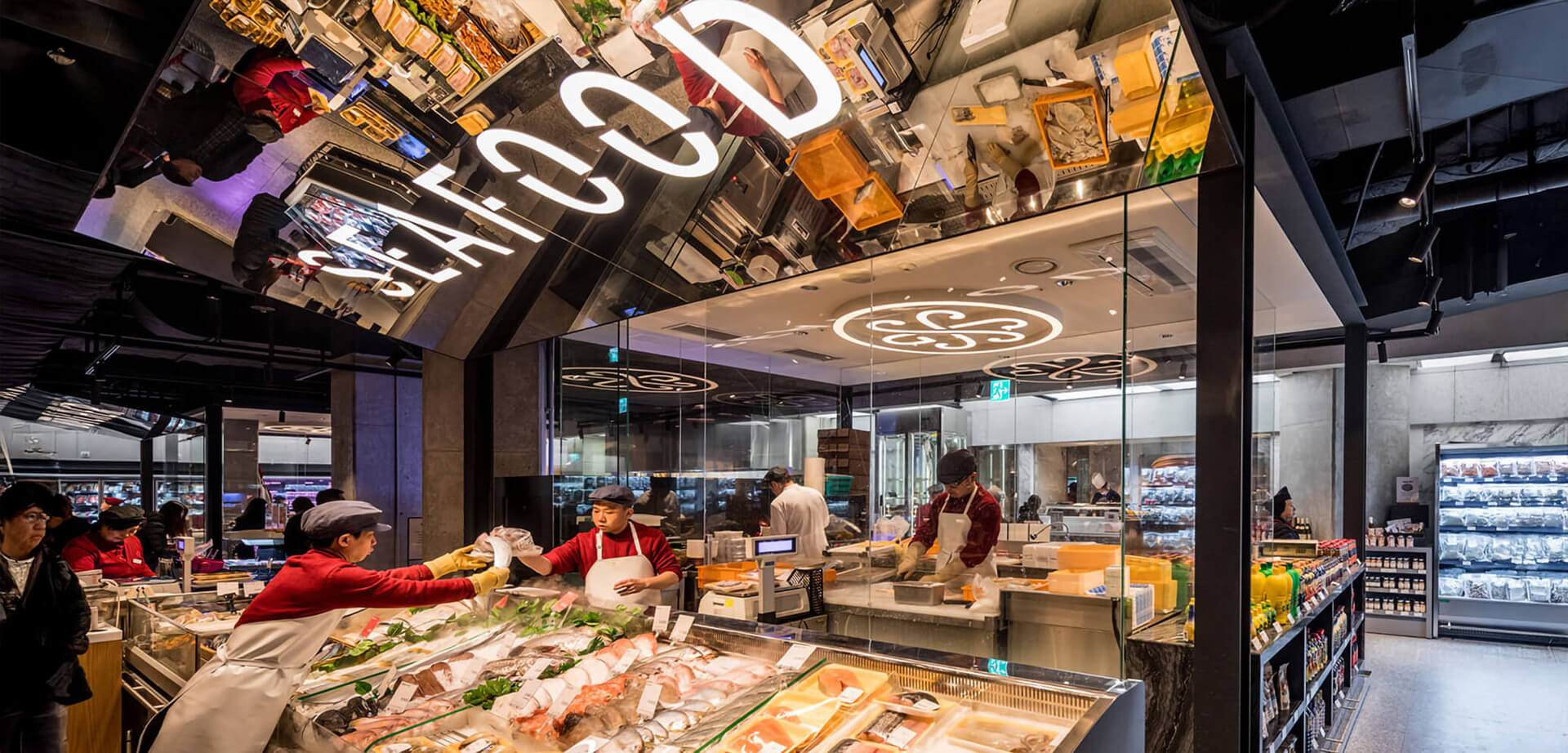
Diseñando el Customer Journey.
Los formatos de hipermercado más competitivos se diseñan cada vez más en torno a las misiones del cliente y no a los departamentos tradicionales.
En lugar de organizar simplemente los productos por categorías, los distribuidores pueden crear zonas en torno a las necesidades del cliente:
Descubrir → Explorar → Experimentar → Comprar → Interactuar → Regresar
Los hipermercados pueden organizar cada vez más el espacio en torno a las misiones del cliente en lugar de hacerlo según departamentos tradicionales: bienestar, soluciones para comidas, food-to-go, compra familiar, descubrimiento y fulfilment omnicanal.
El marco estratégico subyacente.
|
Distribuidor |
Modelo de reinvención |
Propuesta central |
|
Carrefour |
Experiencia + calidad + omnicanal |
Valor + calidad + bienestar + propósito |
|
E.Leclerc |
Valor + productividad + renovación modular |
Elección + precio |
|
SSG Food Market |
Premiumización + descubrimiento |
Alimentación premium + lifestyle + experiencia |
Branding, Store Design y rendimiento comercial.
El objetivo es comercial. Una propuesta de hipermercado más potente puede generar:
Mayor diferenciación → mayor engagement del cliente → mayor tiempo de permanencia → cestas más grandes → mayor fidelización → mayor valor de marca → mejor rendimiento/m²
El Store Design no es decoración. Es una herramienta comercial para mejorar la productividad del espacio, el engagement del cliente y el ROIC.
La propia investigación de CampbellRigg sobre diseño de supermercados europeos identifica estas tendencias como componentes importantes de la próxima generación de formatos de alimentación.
La oportunidad comercial consiste, por tanto, en conectar la estrategia de marca con el rendimiento físico del retail.
El hipermercado del futuro no será necesariamente más grande.
Puede ser más pequeño, inteligente, local, personalizado y orientado a la experiencia.
La tecnología respaldará cada vez más esta transformación mediante IA, analítica predictiva, personalización digital, merchandising inteligente y customer journeys conectados.
Los distribuidores ganadores combinarán la tecnología con una propuesta humana sólida: productos diferenciados, espacios atractivos, servicios relevantes y una razón clara para que los clientes los elijan.
Por tanto, el hipermercado del futuro tendrá menos que ver con vender alimentos y más con ocupar un lugar diferenciado en la vida de los clientes.
El futuro de los hipermercados: del hipermercado a una plataforma de retail de alto rendimiento.
Estos ejemplos apuntan hacia un futuro común, pero no hacia un único formato. Carrefour está haciendo que la escala, el valor y la conveniencia omnicanal trabajen de forma más eficiente; SSG utiliza la alimentación premium, el bienestar y el lifestyle para justificar visitas de mayor valor; E.Leclerc combina una sólida propuesta de precios con una renovación flexible y sostenible.
Por tanto, el hipermercado exitoso se está convirtiendo en parte supermercado, parte mercado de productos frescos, parte destino de foodservice, parte centro de experiencias y parte hub de fulfilment.
Aquí es donde el Store Design adquiere importancia comercial para el ROIC.
Productividad del espacio → tráfico → conversión → tamaño de la cesta → fulfilment → ROIC
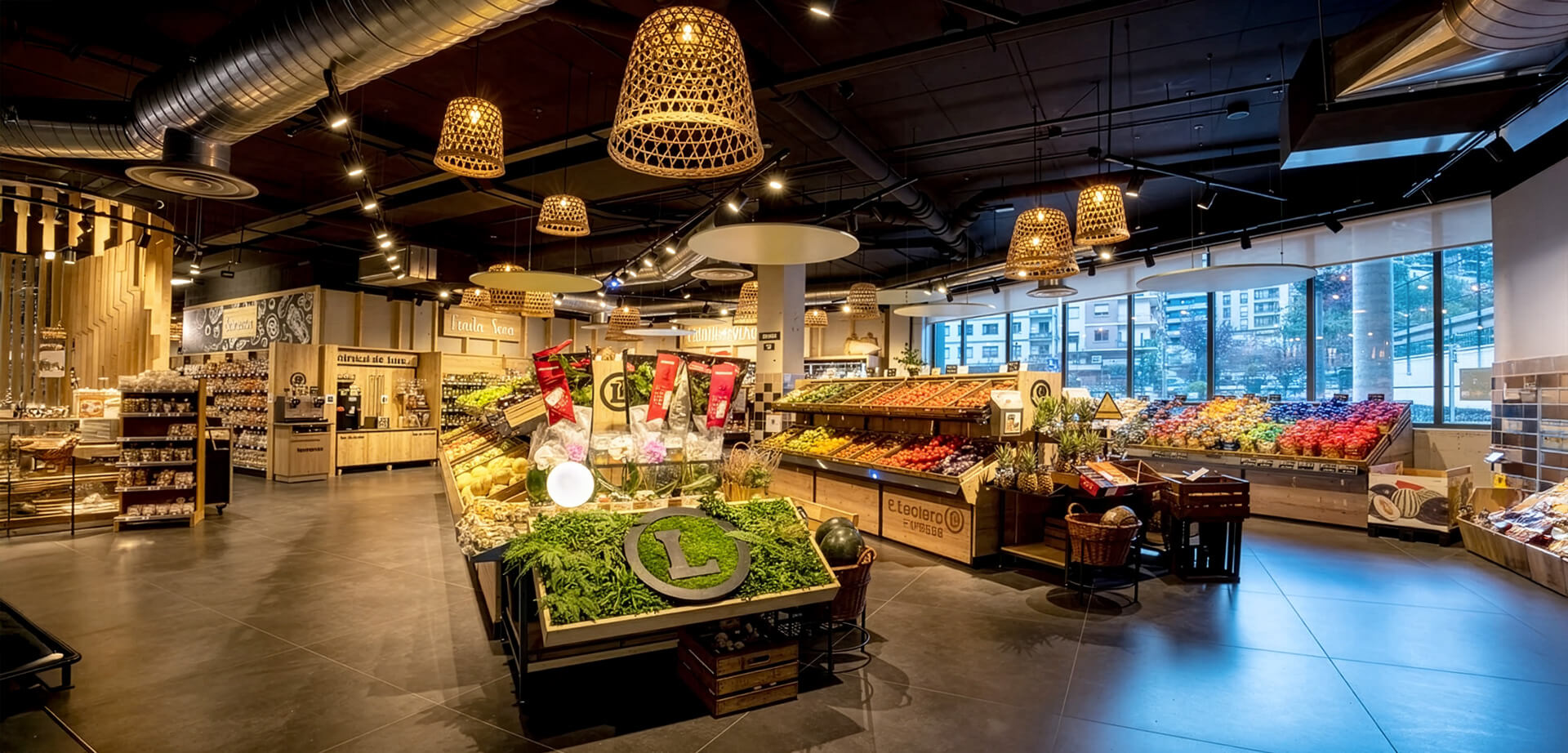
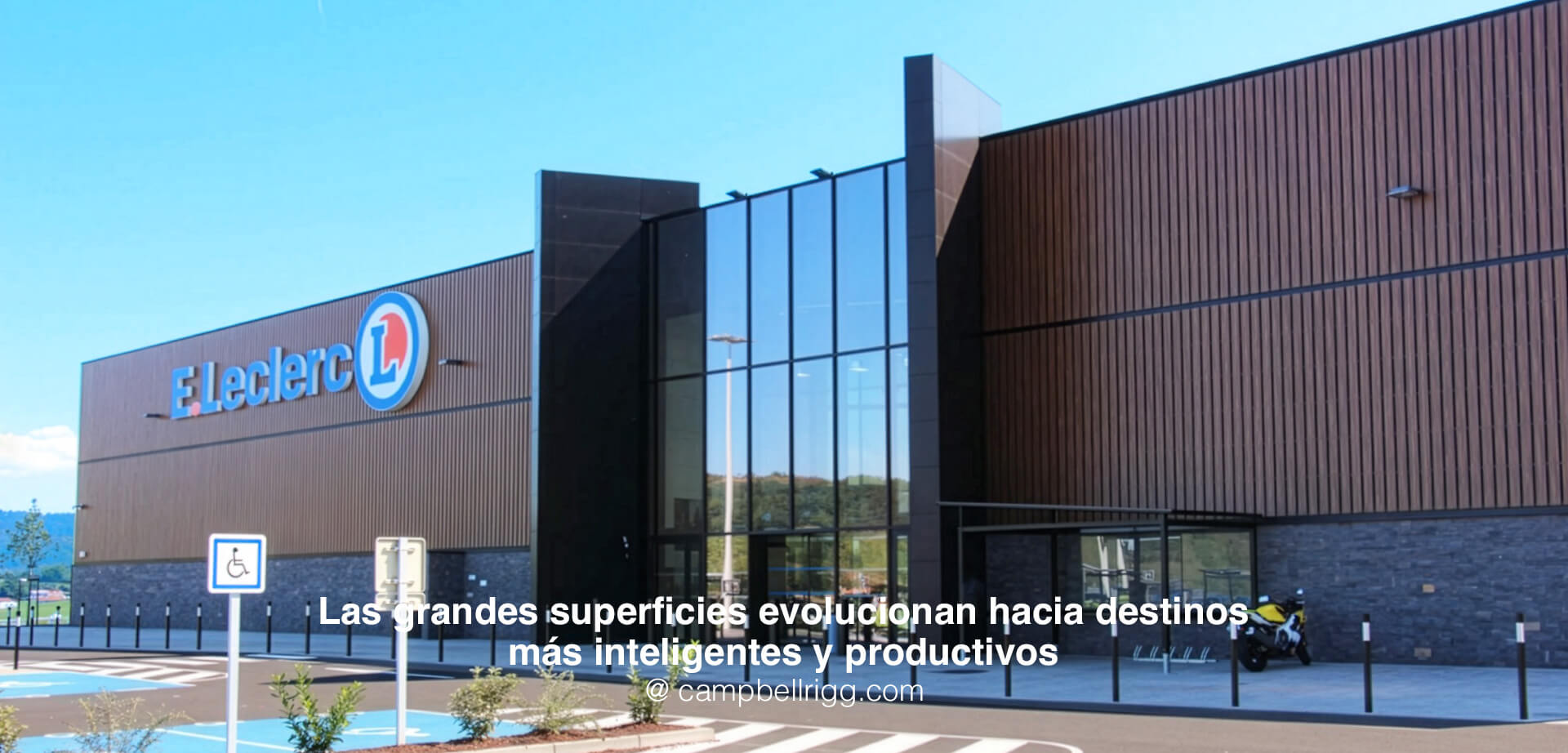
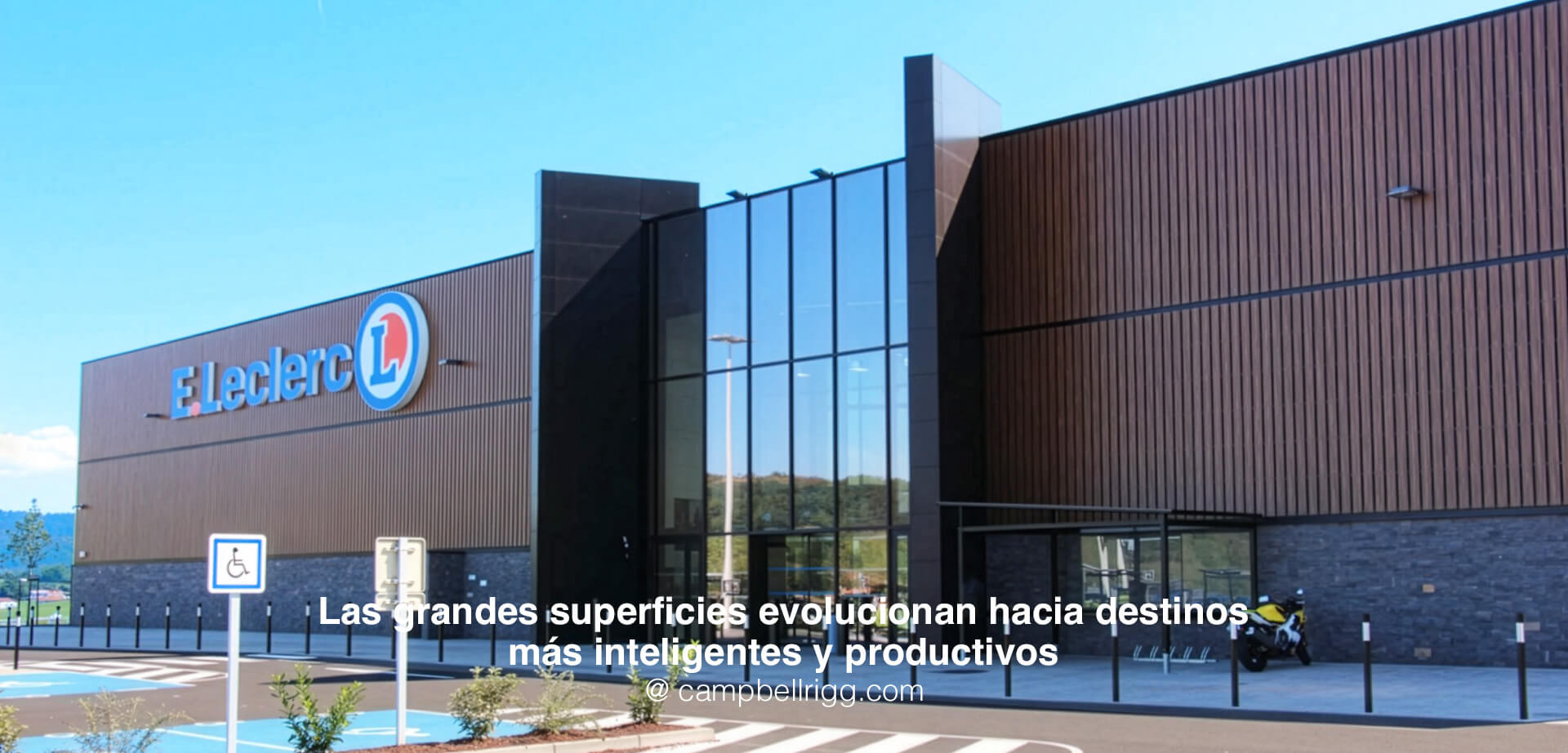
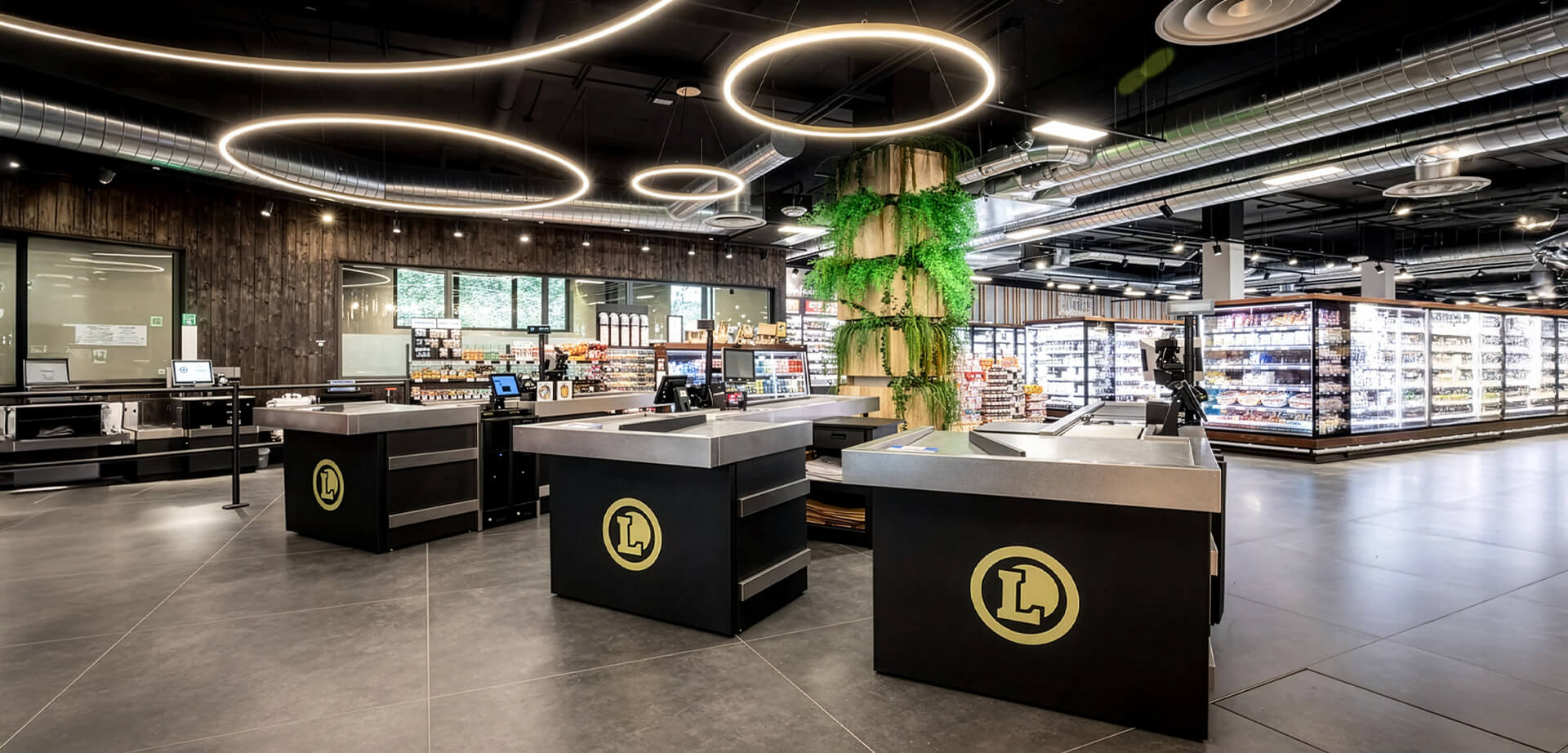
Arriba: supermercado E.Leclerc de 1.400 m² situado en Andorra, España.
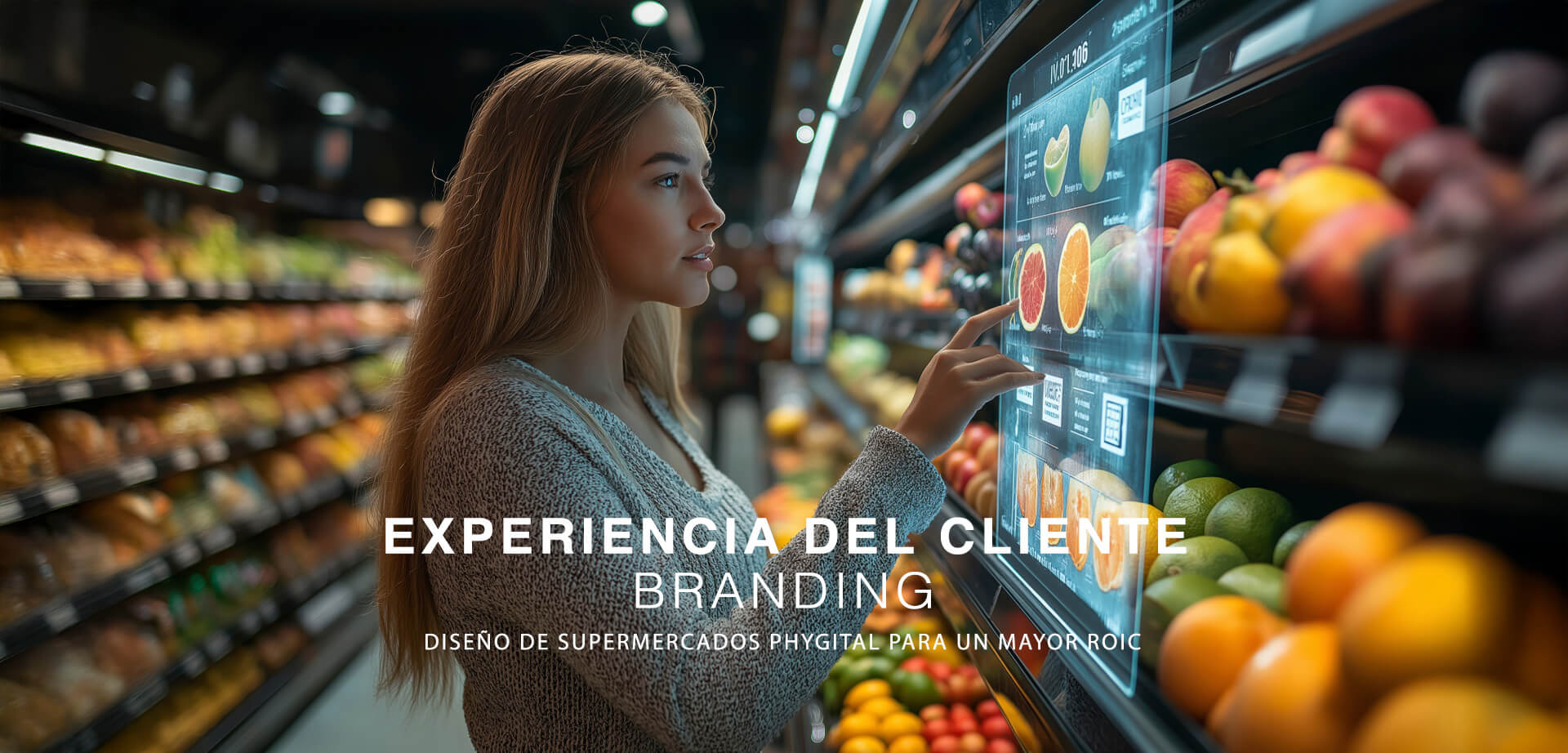
La tecnología está cada vez más integrada en lugar de simplemente añadida: los pedidos digitales, click and collect, entrega, autoservicio, merchandising basado en datos y customer journeys personalizados conectan las propuestas física y digital.
La estrategia ganadora no consiste en hacer que todos los hipermercados parezcan baratos o premium. Consiste en hacer que la propuesta sea más relevante para el cliente elegido, su estilo de vida y su posicionamiento de precio.
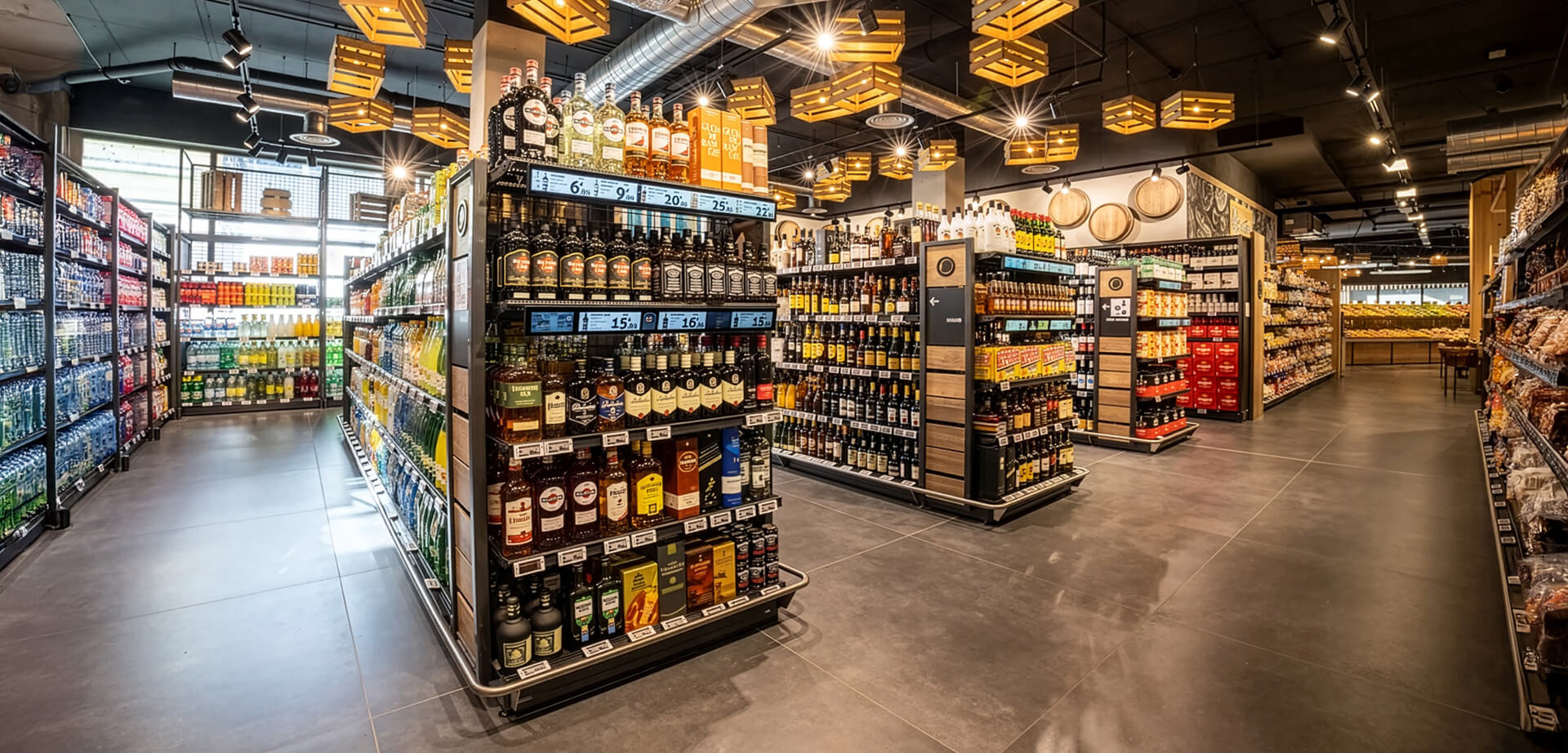
El hipermercado del futuro no será necesariamente más grande.
El hipermercado del futuro será más pequeño, inteligente y productivo; no necesariamente más pequeño en superficie, sino más productivo en cada metro cuadrado.
Los ganadores combinarán productos frescos, descubrimiento, foodservice, conveniencia, fulfilment digital y experiencia con una planificación disciplinada del espacio y un ROIC medible.
Cómo puede ayudar CampbellRigg
CampbellRigg reúne estas disciplinas a través de estrategia de supermercados, posicionamiento de marca, planificación del customer journey, arquitectura, interiorismo, visual merchandising, wayfinding, integración digital y sistemas de formato escalables.
Su experiencia internacional en supermercados y su perspectiva entre mercados pueden ayudar a los distribuidores a convertir los insights de los compradores en entornos comercialmente productivos.
Para operadores de hipermercados, supermercados y tiendas de conveniencia, este enfoque integrado puede identificar espacios ineficientes, redefinir las misiones de compra, clarificar el posicionamiento de marca y precio, fortalecer los destinos de productos frescos, crear experiencias de lifestyle diferenciadas y conectar las tiendas físicas con los servicios omnicanal.
El enfoque de CampbellRigg no consiste en diseñar por diseñar, sino en crear entornos comercialmente eficaces diseñados para mejorar el engagement del cliente, la productividad de las ventas y el ROIC a largo plazo.
Por tanto, el futuro del hipermercado estará menos definido por su tamaño que por la inteligencia con la que se utilice ese espacio. Los distribuidores que triunfen convertirán las grandes tiendas de activos heredados costosos en destinos productivos, diferenciados y conectados digitalmente, diseñados en torno a la evolución del comportamiento del comprador.
The future of the hypermarket requires a strategy for store transformation, and format reinvention.
For retailers, the prize is higher traffic, stronger conversion, larger baskets, greater loyalty and better return on invested capital.
Across international grocery retail, leading operators are challenging the traditional large-format model by reducing unproductive space, strengthening fresh food, introducing specialist experiences, integrating digital services and making stores work as omnichannel fulfilment assets.
The objective is no longer simply to sell more products across more square metres. It is to turn every square metre into a stronger reason to visit, buy, discover, eat, collect or return. This will be achieved achieved by improving the customer experience, the hypermarket omnichannel and hypermarket technology
Carrefour, E.Leclerc and SSG Food Market demonstrate different approaches to this transformation: Carrefour combines value, quality, wellbeing and omnichannel convenience; E.Leclerc strengthens its value proposition through flexible, sustainable renewal; while SSG Food Market turns grocery shopping into a premium food-and-lifestyle experience.
The strategic opportunity is clear: redesign the hypermarket around customer behaviour, improve sales productivity per square metre and turn large stores from costly legacy assets into distinctive, high-performing destinations that generate stronger customer engagement, loyalty and ROIC.
How are hypermarkets being reinvented?
The strategic opportunity is to make the hypermarket more relevant to changing shopper missions. Fresh-food theatre, prepared meals, foodservice, discovery, convenience, value and digital fulfilment can create reasons to visit that a local store or online basket cannot easily replicate.
For retailers, the prize is higher traffic, stronger conversion, larger baskets, greater loyalty and better return on invested capital.
Why hypermarkets must change → 2027–28 transformation trends → three reinvention models → customer-mission planning → space productivity → omnichannel + AI → store design → ROIC → CampbellRigg methodology.
Carrefour is making the hypermarket work harder by assesing hypermarket retail design trends for 2026 - 2027
Carrefour's Villiers-en-Bière hypermarket demonstrates how a very large store can be redesigned around today's shopper. The 26,000-square-metre store has more than 10,000 references, annual sales of about €170 million and annual footfall of around 4.5 million.
Its renovation introduced a clearer plan that separates recurring, useful shopping missions from quicker pleasure-led journeys, making the enormous selling space easier to navigate.
The project has a stated objective of +20% performance, illustrating the commercial ambition behind large-format reinvention. Carrefour also integrates click-and-collect, home delivery and other services, reinforcing the hypermarket's role as both shopping destination and omni-channel fulfilment asset. The current Villiers-en-Bière offer includes click-and-collect, delivery and online traiteur services ( ready-to-eat or ready-to-serve prepared foods ).
We list below key issues that should be addressed at every stage of development.
- Space productivity
- Fresh-food theatre
- Experience-led retail
- Premiumisation
- Omnichannel fulfilment
- AI-powered personalisation
- Mission-based store planning
- Wellness and foodservice
- Localisation research
- ROIC-led format optimisation
Carrefour’s target audience is broad: families, mainstream and value-conscious households, and customers combining a weekly shop with immediate meal, convenience and service needs. Its position is mass-market and accessible rather than luxury, using choice, promotions, fresh food and convenience to create value.
Carrefour’s USP combines accessible quality and premium food with wellbeing, discovery and experience.
Its proposition brings together curated organic and responsibly sourced products, fresh prepared food, cafés, health and wellness, beauty, emerging brands and distinctive private-label products. By extending beyond traditional grocery retail into food culture, convenience and lifestyle, Carrefour creates a more engaging destination that strengthens differentiation, loyalty and basket value.
Carrefour’s Villiers-en-Bière hypermarket differentiates itself by combining value pricing with a broader, more experiential customer journey. Shoppers can discover wellness products and new brands, purchase prepared meals or fresh juices, pause at cafés and engage with social-media-oriented experiences.
Price is an important part of the positioning.
Price remains central to the proposition. Unlike discounters such as Lidl and Aldi, whose journeys focus on low prices and efficient shopping, and traditional hypermarkets such as E.Leclerc, where assortment breadth and price competitiveness dominate, Carrefour adds discovery, foodservice and lifestyle experiences without abandoning value.
Prepared foods, fresh juices and smoothies can be positioned below typical specialist or premium foodservice prices, making experiential products accessible rather than indulgent. The result is a distinctive combination of competitive pricing, affordable discovery and lifestyle-led experiences.
Customers are therefore not simply buying groceries; they are participating in a contemporary food-and-wellness proposition, while Carrefour captures additional occasions, greater engagement and potentially higher basket value.
Carrefour Quality, Wellbeing and Purpose
Carrefour takes a quality- and purpose-led approach to differentiation, combining natural and organic products, responsible sourcing, fresh food, prepared meals and wellbeing with standards designed to make these commitments tangible.
Rather than relying primarily on advertising, Carrefour uses product quality, sourcing, freshness and transparency as physical proof of its brand promise. This helps differentiate it from price-focused discounters and conventional hypermarkets where quality and sustainability may be less central.
The result is a proposition in which quality, wellbeing and purpose are embedded throughout the customer journey, from product selection and merchandising to foodservice, packaging and in-store communication.
Carrefour = Makes the hypermarket more experiential and omnichannel.
E.Leclerc is flexible, modular and sustainable renewal.
The La Roche-sur-Yon hypermarket illustrates a third model: value-led modernisation. Following a three-year comprehensive renovation, the 6,650 m² store reopened with an evolutionary, modular and environmentally responsible design. Natural light, clearer layouts, fresh-food presentation, convenience and an experience-led environment create a more attractive and adaptable shopping destination.
The project explicitly combines renewal with E.Leclerc's price positioning: “at E.Leclerc prices”.
The project set an ambitious +33% growth objective over five years. While no specific traffic or like-for-like sales uplift has been publicly quantified, the target demonstrates the potential commercial upside of combining better customer experience with more productive store planning.
E.Leclerc = choice + price + purchasing power + modular renewal.
Its USP is built around price leadership, purchasing power and customer value, while Carrefour combines value with quality, wellbeing, responsible sourcing and experience.
Its broad, value-conscious audience is differentiated by a strong price image and locally adaptable, independent-operator model.
Its competitive strength comes from a broad supermarket and hypermarket offer at highly competitive prices, supported by private-label ranges, national brands, fresh food and a sophisticated digital and omnichannel proposition. Its cooperative structure reinforces its consumer-focused positioning.
E.Leclerc’s competitive strength comes from its ability to offer a very broad supermarket and hypermarket proposition at highly competitive prices, supported by strong private-label ranges, national brands, fresh food and an increasingly sophisticated digital and omnichannel offer.
Carrefour’s differentiation is more brand-led and purpose-driven. It connects food with organic and natural products, responsible sourcing, freshness, prepared food, health and wellbeing, using its quality standards and sustainability commitments to make the proposition tangible in-store.
The distinction can therefore be summarised as:
Carrefour = Makes the hypermarket more experiential and omnichannel.
E.Leclerc = Makes the hypermarket more productive and value-led.
This creates different customer journeys.
E.Leclerc encourages shoppers to compare, select and maximise value across a broad assortment. Carrefour seeks to add discovery, reassurance and lifestyle relevance to the shopping mission, giving customers reasons to explore beyond their planned grocery purchase.
SSG Food Market: the hypermarket becomes a lifestyle destination.
South Korea's SSG Food Market shows another route to reinvention: turning grocery shopping into a premium food-and-lifestyle experience. Its Cheongdam store combines curated food, fresh products, specialist ranges and foodservice, creating a destination that extends beyond conventional supermarket retail.
The SSG Food Market takes a very different route: premiumisation. Its sales grew 153.9% year-on-year in 2013 and 23.3% in 2014.
SSG Food Market can differentiate itself by moving beyond the traditional supermarket mission to create a curated food-and-lifestyle destination. Its USP combines premium and emerging products, fresh and prepared food, distinctive foodservice, cafés and social spaces with wellness, convenience and experiential merchandising. Rather than competing primarily on price, like E.Leclerc, or through the broader combination of value, quality and purpose pursued by Carrefour, SSG can compete through curation, discovery, service and experience.
The customer journey becomes less about simply completing a grocery shop and more about discovering new products, eating, socialising, exploring and returning for memorable experiences. This creates stronger emotional engagement and gives SSG Food Market a distinctive identity, positioning the supermarket as a contemporary food destination rather than simply a place to buy groceries.
Three models of hypermarket reinvention
Carrefour = Makes the hypermarket more experiential and omnichannel.
E.Leclerc = Makes the hypermarket more productive and value-led.
SSG Food Market = Turns premium food, lifestyle and discovery.
Designing the Customer Journey.
The strongest hypermarket formats are increasingly designed around customer missions rather than traditional departments.
Instead of simply organising products by category, retailers can create zones around customer needs: Discover → Explore → Experience → Purchase → Engage → Return
Hypermarkets can increasingly organise space around customer missions rather than traditional departments: wellness, meal solutions, food-to-go, family shopping, discovery and omnichannel fulfilment.
The underlying strategic framework.
Retailer Reinvention model Core proposition
Carrefour Experience + quality + omnichannel Value + quality + wellbeing + purpose
E.Leclerc Value + productivity + modular renewal Choice + price
SSG Food Market Premiumisation + discovery Premium food + lifestyle + experience
Branding, Store Design and Commercial Performance.
The objective is commercial. A stronger Hypermarket proposition can support: Greater differentiation → stronger customer engagement → increased dwell time → larger baskets → higher loyalty → stronger brand equity → improved performance/m²
Store design is not decoration. It is a commercial tool for improving space productivity, customer engagement and ROIC.
CampbellRigg's own research into European supermarket design identifies these trends as important components of the next generation of grocery formats.
The commercial opportunity is therefore to connect brand strategy with physical retail performance.
The Hypermarket of the future will not necessarily be larger.
It may be smaller, smarter, more local, more personalised and more experience-led.
Technology will increasingly support this transformation through AI, predictive analytics, digital personalisation, intelligent merchandising and connected customer journeys.
The winning retailers will combine technology with a strong human proposition: distinctive products, compelling spaces, relevant services and a clear reason for customers to choose them.
The future hypermarket will therefore be less about selling groceries and more about owning a distinctive place in customers' lives.
The future of hypermarkets - From hypermarket to high-performance retail platform.
These examples point towards a common future, but not a single format. Carrefour is making scale, value and omni-channel convenience work harder; SSG is using premium food, wellness and lifestyle to justify higher-value visits; E.Leclerc is combining a strong price proposition with flexible, sustainable renewal. The successful hypermarket is therefore becoming part supermarket, part fresh-food market, part foodservice destination, part experience centre and part fulfilment hub.
This is where store design becomes commercially important for ROIC.
Space productivity → traffic → conversion → basket size → fulfilment → ROIC
Above: E.Leclerc's 1,400 m² Supermarket situated in Andorra, Spain.
Technology is increasingly embedded rather than simply added: Digital ordering, click-and-collect, delivery, self-service, data-driven merchandising and personalised customer journeys connect the physical and digital propositions. The winning strategy is not to make every hypermarket look cheap or premium. It is to make the proposition more relevant to its chosen customer, lifestyle and price position.
The Hypermarket of the future will not necessarily be larger.
The future hypermarket will be smaller, smarter and more productive, not necessarily smaller in footprint, but more productive in every square metre. The winners will combine fresh food, discovery, foodservice, convenience, digital fulfilment and experience with disciplined space planning and measurable ROIC.
How CampbellRigg can help
CampbellRigg brings these disciplines together through supermarket strategy, brand positioning, customer-journey planning, architecture, interior design, visual merchandising, wayfinding, digital integration and scalable format systems. Its international supermarket experience and cross-market perspective can help retailers translate shopper insight into commercially productive environments.
For hypermarket, supermarket and convenience store operators, this integrated approach can identify inefficient space, redefine shopper missions, clarify brand and price positioning, strengthen fresh-food destinations, create differentiated lifestyle experiences and connect physical stores with omnichannel services. CampbellRigg's focus is not design for its own sake, but commercially effective environments designed to improve customer engagement, sales productivity and long-term ROIC.
The future of the hypermarket will therefore be defined less by its size than by how intelligently that space is used. The retailers that win will turn large stores from costly legacy assets into productive, distinctive and digitally connected destinations built around changing shopper behaviour.