
News and Views
AI-Powered Bank Branches: How Agentic AI Is Reshaping Retail Banking.




How Agentic AI Is Redefining Retail Banking, Customer Experience and Branch Design.
Retail banking is entering a new phase of transformation.
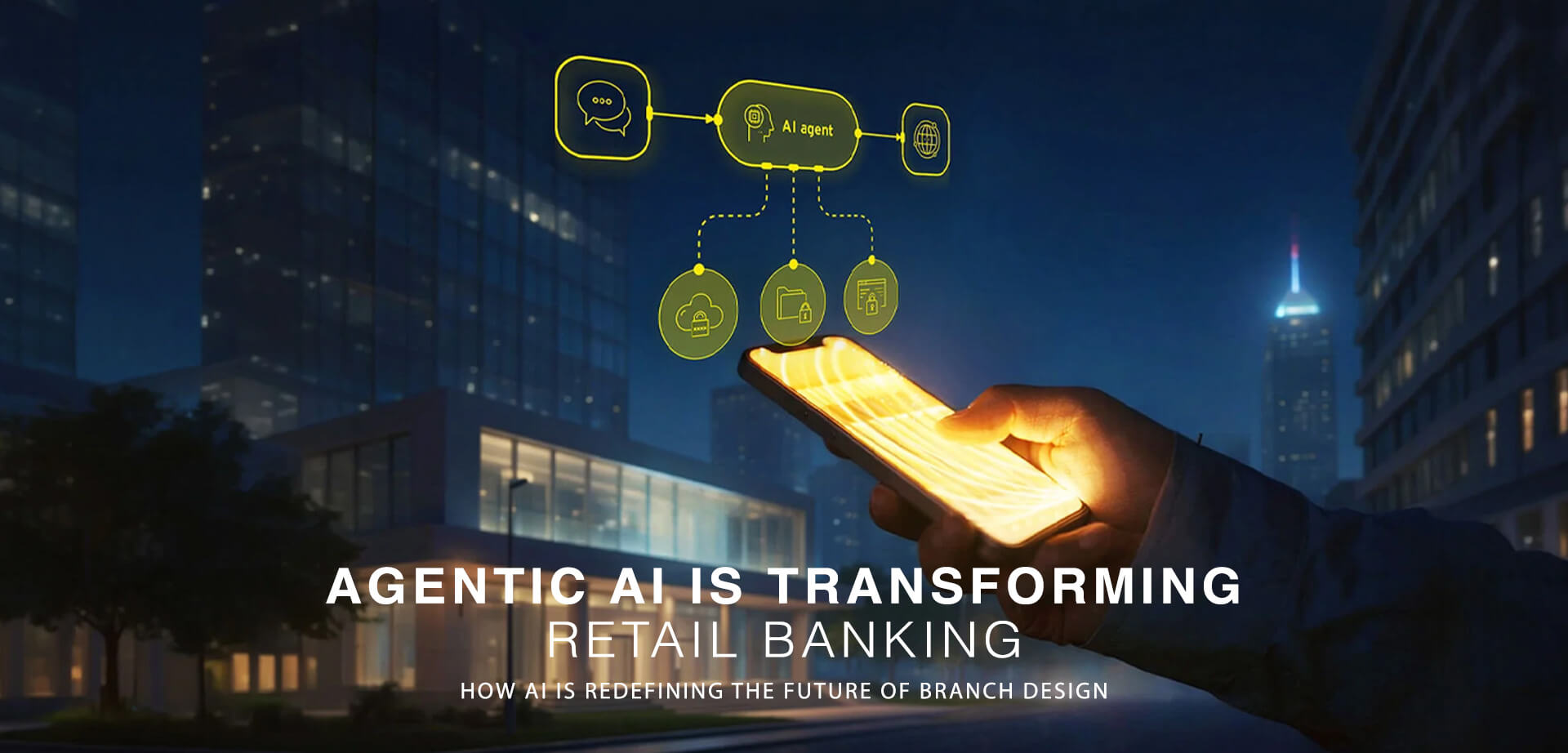
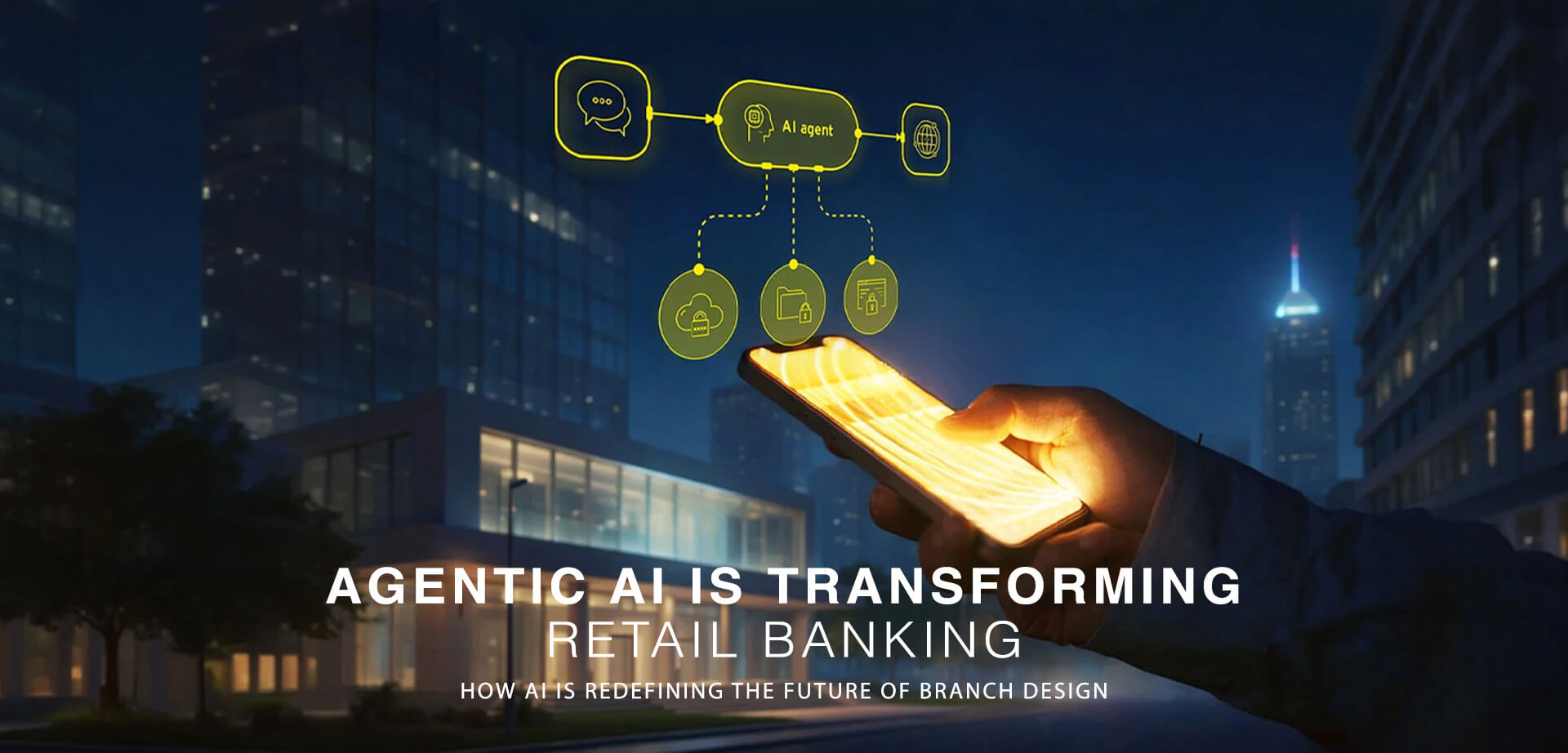
Artificial intelligence is moving beyond chatbots and automated responses towards agentic AI - systems capable of reasoning, coordinating tasks and taking action across multiple banking processes.
For banks, this creates a fundamental question:
If AI can automate more banking services, what should the physical bank branch become?
The answer is not to make branches more technological. It is to make them more intelligent, more personalised and more human.
The future bank branch will combine AI, digital platforms, data, brand experience and human expertise to create a new generation of phygital banking environments.
What Is Agentic AI in Retail Banking?
Traditional AI typically responds to a request. Agentic AI can go further.
An AI agent can understand a customer's objective, gather relevant information, coordinate multiple processes, recommend an action and execute parts of the journey, while escalating complex or sensitive decisions to a human specialist.

In retail banking, this could transform activities such as:
- account opening
- mortgage applications
- lending and credit journeys
- financial product discovery
- customer service
- fraud and risk processes
- appointment preparation
- personalised financial guidance
- post-sale support
Boston Consulting Group estimates that agentic AI could potentially increase banking profitability by up to 30% and reduce costs by 30–40% by 2030, although these outcomes depend on successful implementation across banking workflows. The implication is significant.

AI is not simply becoming another banking channel. It is becoming an intelligent layer connecting channels, data, people and processes.
Agentic AI Could Change the Customer Journey
Today, many banking journeys remain fragmented.
A customer may research a mortgage online, complete an application on a mobile device, contact a call centre, upload documents and eventually visit a branch to speak with an advisor.
Agentic AI can potentially connect these steps.
A customer could ask an AI banking assistant:
“I want to buy my first home. What can I afford?”

The agent could analyse relevant financial information, identify potential products, prepare documentation, explain the next steps and arrange an appointment with a mortgage specialist.
When the customer enters the branch, the advisor already understands the context.
The conversation starts with the customer's needs rather than a blank screen.
The branch becomes a continuation of the digital journey, not a separate channel.
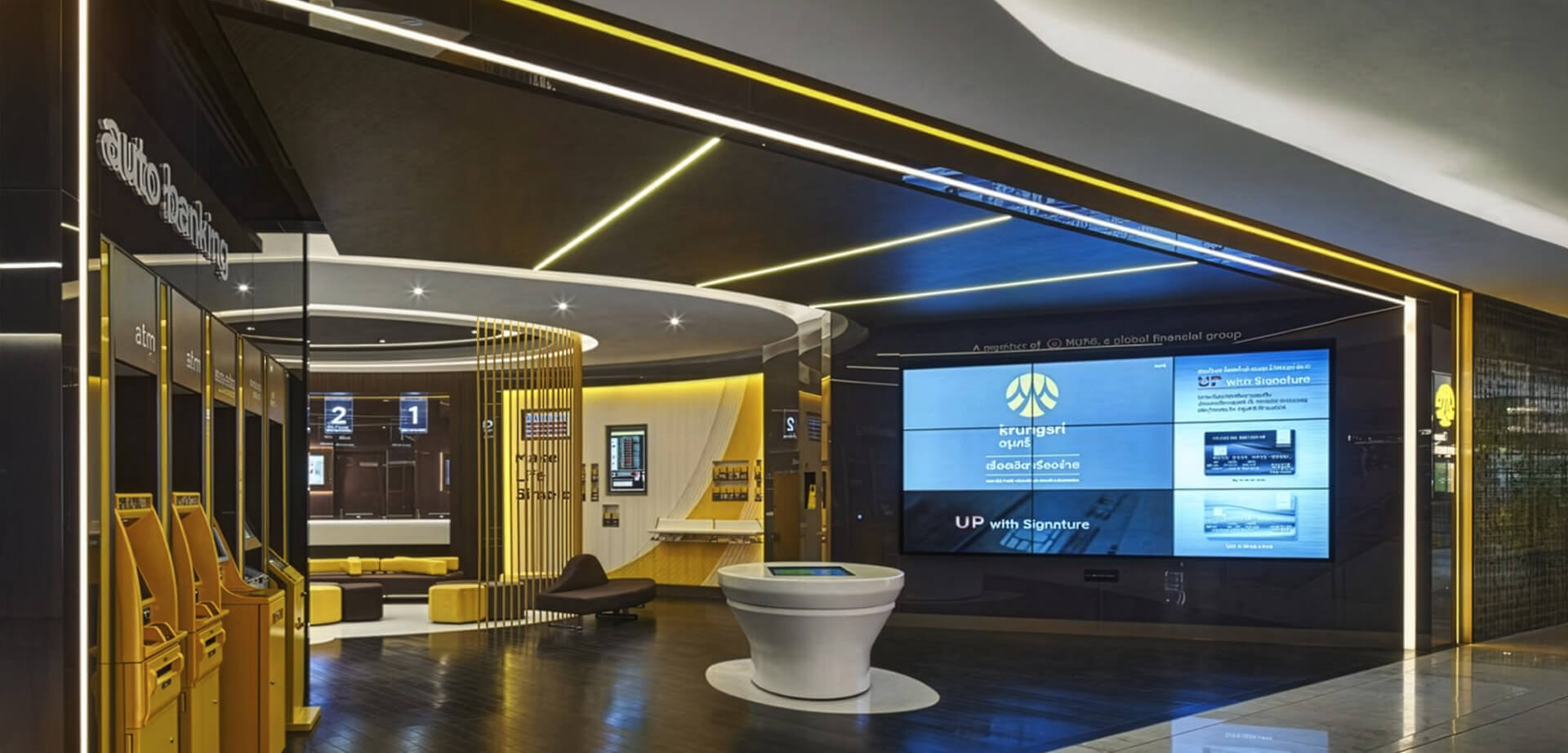
The Future Bank Branch Is an Intelligent Experience Hub
This is where branch design becomes strategically important.
As routine transactions become increasingly automated, physical branches do not necessarily become less relevant.
They can become more valuable.
The reason is simple.
AI can handle many routine interactions remotely. Human beings remain particularly valuable when customers need reassurance, judgement, empathy and expertise.
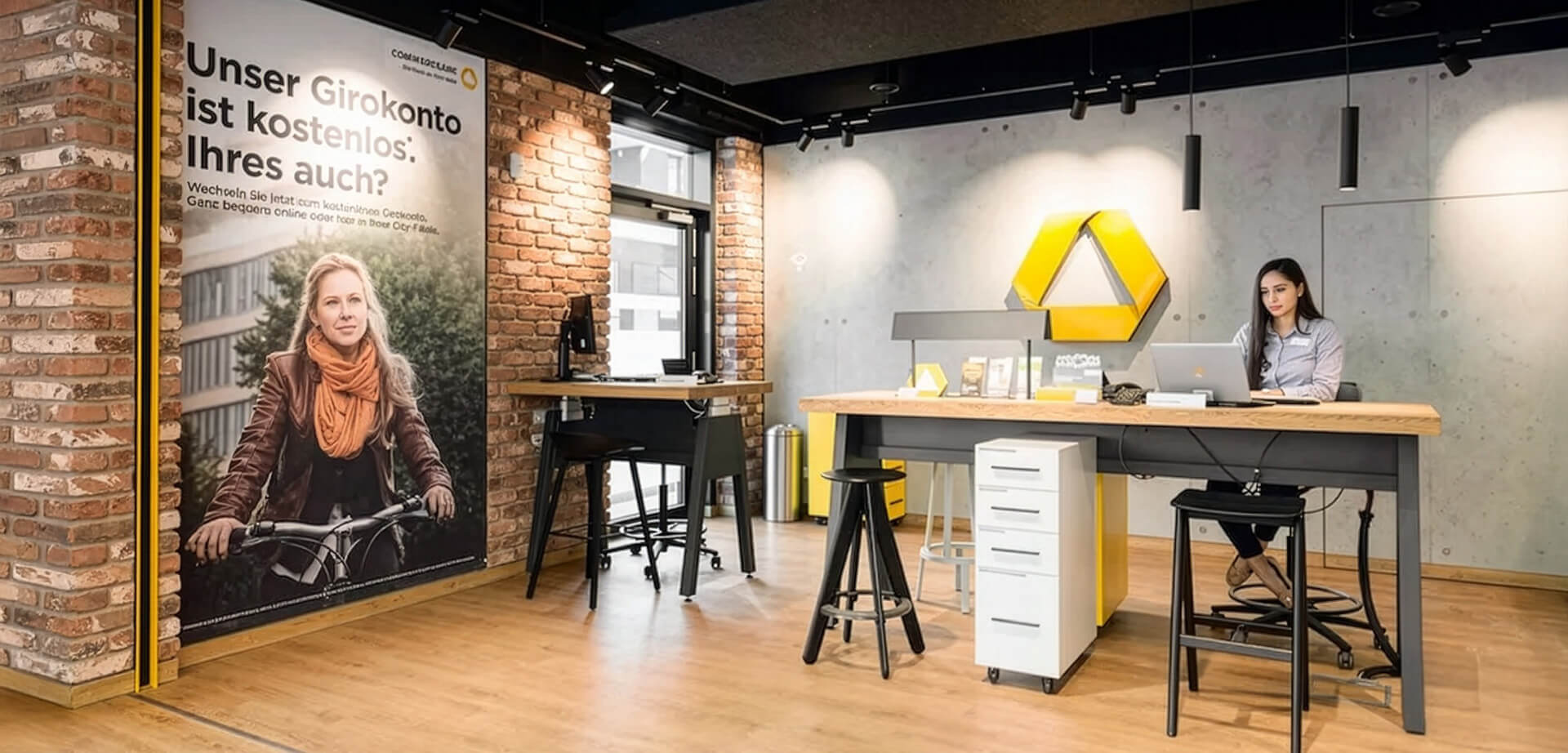
The branch therefore evolves from a transactional environment into an intelligent customer experience hub.
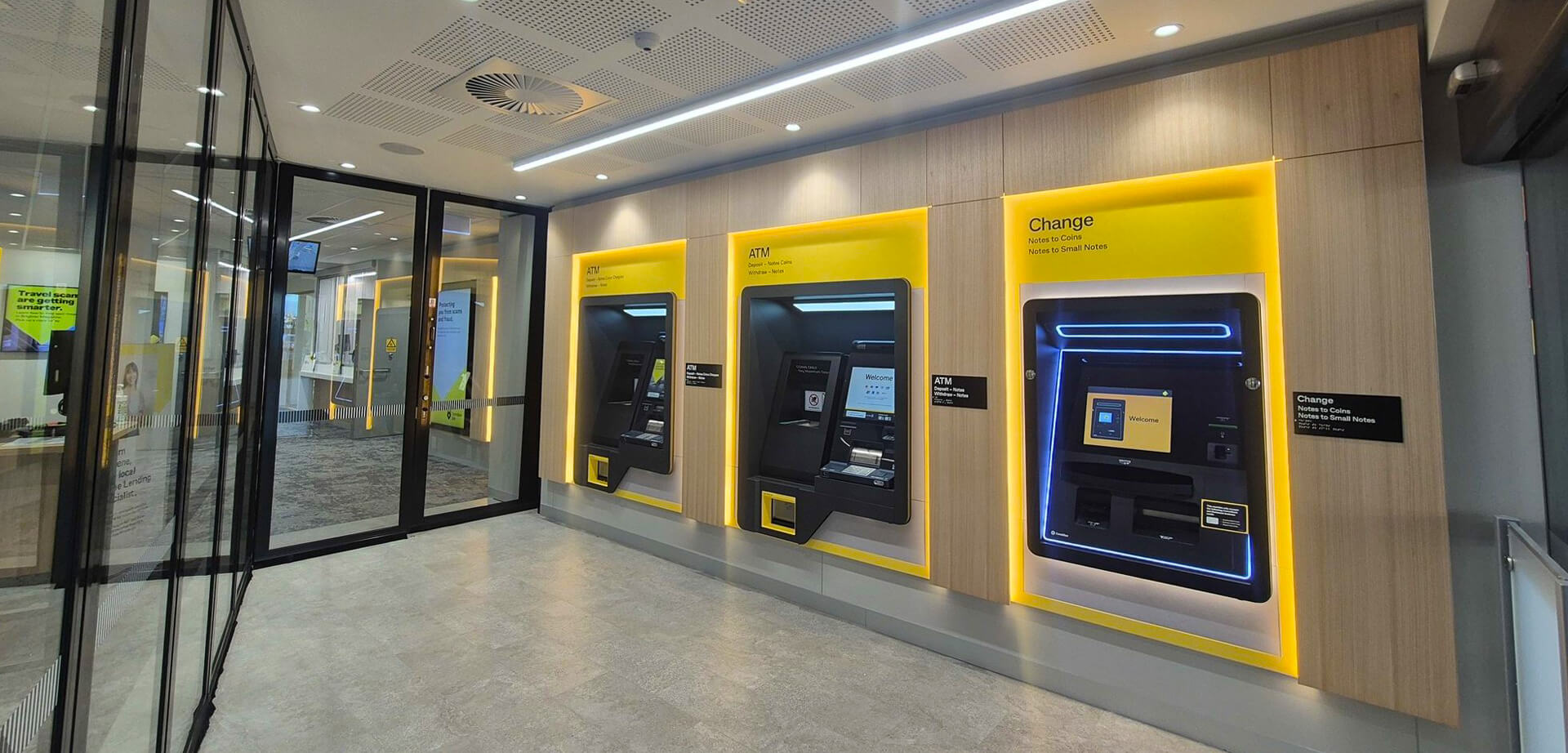
The future bank branch will therefore be neither simply digital nor physical. It will be intelligent, connected and human-centred: a phygital banking environment designed around customer needs, brand differentiation and measurable business outcomes.

Instead of rows of traditional counters, future environments can include:
AI Discovery Zones
Interactive digital environments can help customers explore financial products, understand options and receive personalised guidance.
Intelligent Self-Service
Routine services can move to intuitive self-service environments supported by AI and digital authentication.
Advisory Spaces
Human advisors can focus on high-value conversations involving mortgages, investments, business finance and complex financial decisions.
Private Consultation Areas
As financial conversations become more personalised, privacy and acoustic comfort become increasingly important components of branch design.
Connected Digital Experiences
Customers should be able to move seamlessly between mobile, web, AI assistant and physical branch without repeatedly explaining their needs.
AI Should Not Dominate the Branch
One of the biggest mistakes banks could make is to interpret AI transformation as a requirement for more screens, kiosks and visible technology.
The opposite may be more effective. The best AI-powered branch may be the one where the technology is least visible.
AI should increasingly operate behind the experience. It can anticipate needs, prepare advisors, personalise recommendations and coordinate journeys without forcing customers to interact with technology at every stage.

The physical environment should therefore remain:
- welcoming
- intuitive
- trustworthy
- accessible
- secure
- human-centred
Technology should support the experience rather than become the experience.
AI Could Make the Physical Branch More Valuable.
There is an important paradox at the heart of AI-powered banking.
The more AI can automate routine banking, the fewer reasons customers may have to visit a branch.
But the reasons that remain can become significantly more important.
Customers may still want face-to-face interaction when making major financial decisions involving:
- buying a home
- retirement
- investments
- business finance
- wealth management
- major borrowing
- financial difficulties
The branch therefore shifts from transaction volume to relationship value.
This creates an opportunity for banks to redesign their networks around fewer but more meaningful customer interactions.

The New Role of Bank Branch Design
Branch design must evolve alongside banking technology.
The traditional branch was designed around processes such as:
queue → counter → transaction
The AI-enabled branch can be designed around:
discover → personalise → advise → decide → connect
This requires a fundamentally different approach to space.
Banks should consider:
Customer journey design
Map how customers move between AI, mobile, branch and human advice.
Format planning
Develop flexible branch formats that can adapt to changing customer behaviour.
Digital-physical integration
Connect digital platforms with physical environments rather than designing them separately.
Human-centred technology
Use AI to support customers and employees without creating unnecessary technological friction.
Brand experience
Make the physical environment express the bank's digital proposition, values and personality.
Privacy and trust
Design environments that reassure customers when AI is involved in sensitive financial decisions.
Agentic AI Also Creates a New Competitive Risk
The transformation is not only about efficiency.
It is also about customer ownership.

McKinsey argues that customers are increasingly using generative AI for financial tasks and that external AI agents could potentially influence product discovery, comparison and financial decisions, creating a risk that customers interact less directly with their bank.
This changes the competitive question.
Banks are no longer competing only with other banks.
They may increasingly compete for visibility inside the AI-driven decision layer.
That makes brand, trust and physical experience even more important.
When an AI agent recommends a financial product, the bank still needs a compelling proposition that customers trust.
And when customers need reassurance, advice or human expertise, the physical branch can become a powerful differentiator.
From Bank Branch to Intelligent Banking Platform
The future bank branch should therefore not be viewed as an isolated physical location.
It should be part of an intelligent banking platform.
The ecosystem can connect:
AI Discovery, recommendation, personalisation and assistance.
Digital
Mobile banking, web platforms and customer data.
Physical
Branch environments, advisory spaces and experiential touchpoints.
People
Advisors, specialists and relationship managers.
Brand
Trust, identity, differentiation and emotional connection.

The result is a seamless customer journey in which technology handles increasing levels of complexity while people focus on the interactions where human judgement matters most.
What Banks Should Do Now
Banks preparing for the next generation of retail banking should consider five strategic priorities:
1. Map the AI-enabled customer journey
Identify which parts of the customer journey should be automated, augmented or delivered through human expertise.
2. Redesign branch formats around customer value
Move away from transaction-led planning towards advisory, experience and relationship-led environments.
3. Connect physical and digital channels
Ensure that customers can move between AI assistants, mobile platforms and branches without losing context.
4. Design for trust
Privacy, transparency, security and human oversight must become part of the physical experience.
5. Measure the commercial impact
AI-powered branch transformation should be measured through customer engagement, conversion, cost-to-serve, productivity, loyalty and return on investment.
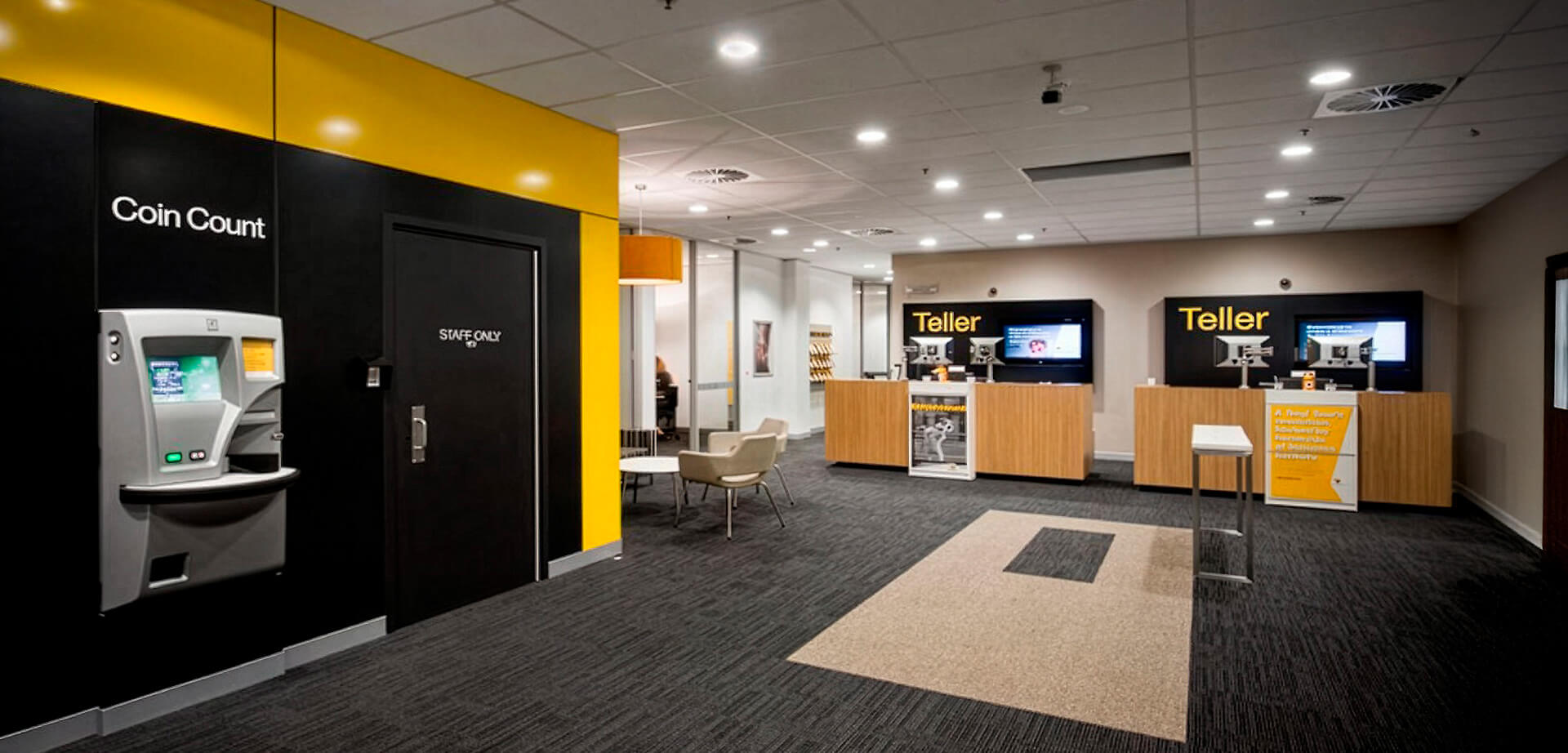
The Future of Retail Banking Is Phygital
Agentic AI is not simply making banking more automated.
It is changing the relationship between technology, people and place.
The branch of the future will not compete with digital banking.
It will extend it.
It will provide the human reassurance, expert advice and trusted environment that digital channels cannot always deliver, while AI and data make those interactions more relevant and personalised.
The winning banks will therefore not ask: “How do we put AI into our branches?”
They will ask: “How should we redesign the branch now that AI can transform the entire customer journey?”
That is the new strategic role of bank branch design.

How CampbellRigg Helps Banks Transform
CampbellRigg combines banking brand strategy, customer experience, architecture, interior design, digital innovation and omnichannel planning to create future-ready banking environments.
Our expertise includes:
- bank branch strategy
- branch audits
- bank architecture
- retail interior design
- customer journey planning
- phygital experience design
- digital-physical integration
- branch format planning
- brand experience
- ROIC measurement
We help financial institutions connect brand, technology, people and physical space to create intelligent banking environments designed for long-term customer value.
The future bank branch is not simply a place where banking happens.
It is an intelligent physical expression of the bank's entire customer ecosystem.