
News and Views
Agentic AI-Powered Bank Branches: The Future of Banking, Branding & Design





Agentic AI is transforming banking, branding and branch design, creating intelligent experience hubs where technology, personalised advice, human expertise and physical AI is transforming bank branches from transaction centres into intelligent experience hubs. Discover how AI, branding and design are reshaping retail banking.

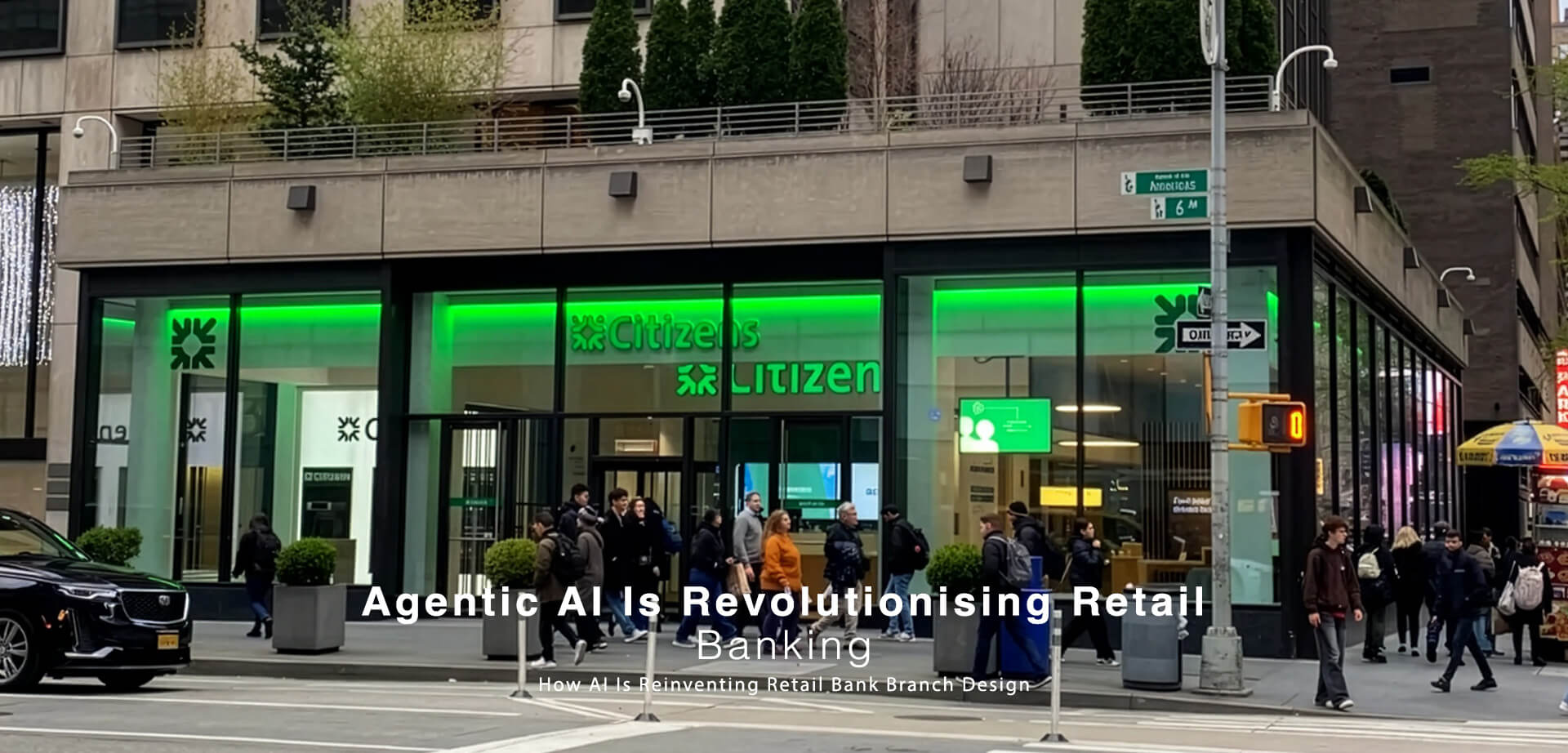
Bank branches are being redesigned for an AI-first era.
Discover how intelligent technology, branding and experience-led design are transforming physical banking.
The bank branch is entering its biggest transformation in decades. AI agents are changing how customers search for financial products, receive advice and manage their money. At the same time, banks are investing heavily in personalised digital experiences, automation and intelligent customer service.
So, what happens to the physical branch?
It becomes an intelligent experience hub.

Visa's latest European banking research shows just how significant the shift could be: 86% of banking leaders surveyed believe AI will fundamentally reshape retail banking by 2030. The UK's Financial Conduct Authority has also identified the transformation of consumer journeys as one of the major AI-driven changes facing retail financial services.

From transaction centre to experience hub
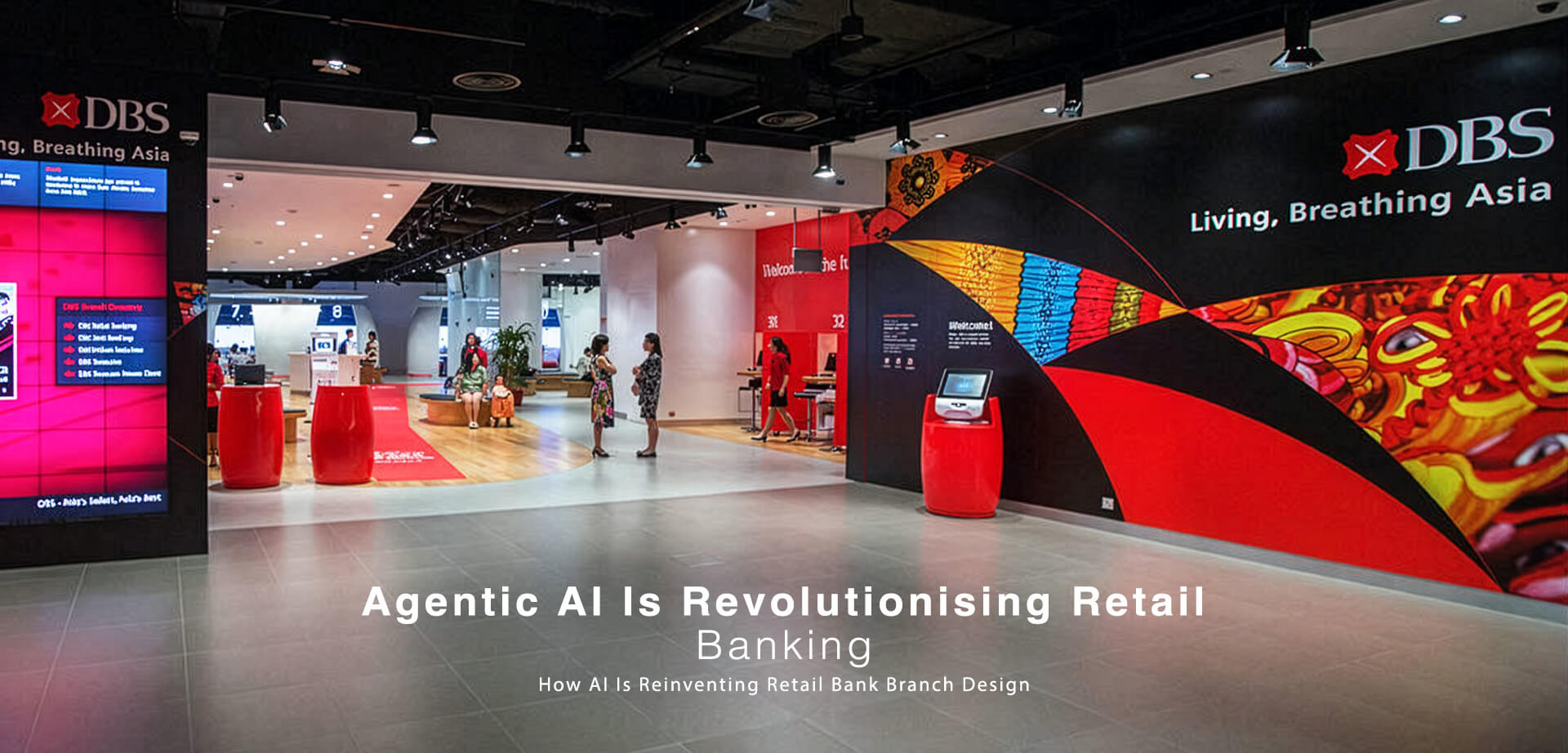
Traditional branches were designed around transactions: counters, queues, cash services and basic customer enquiries.
AI changes the economics and experience of these spaces.
Routine interactions can increasingly move to digital and intelligent self-service channels, freeing branch employees to concentrate on advice, relationship building and higher-value financial conversations.
The result is a fundamentally different branch layout.

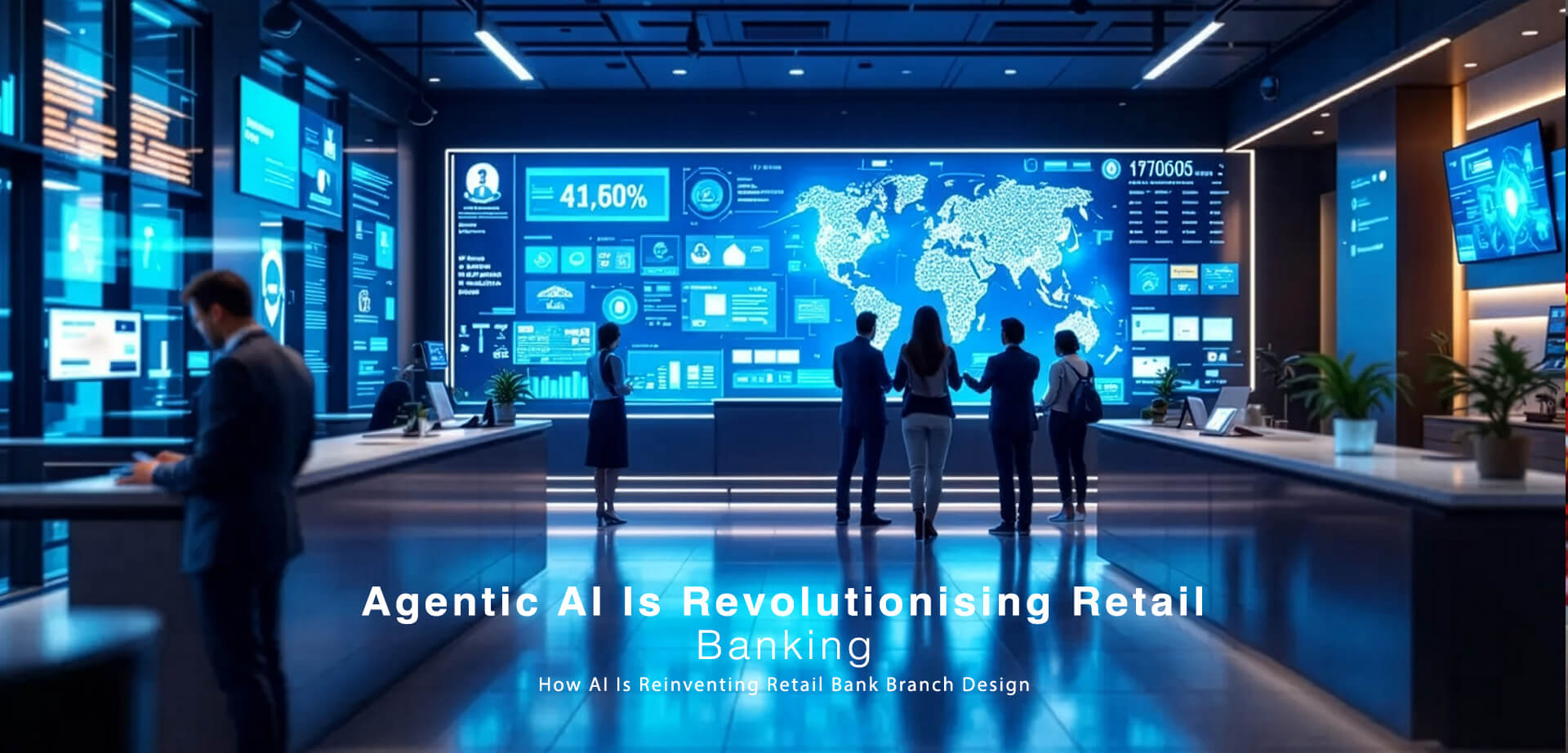
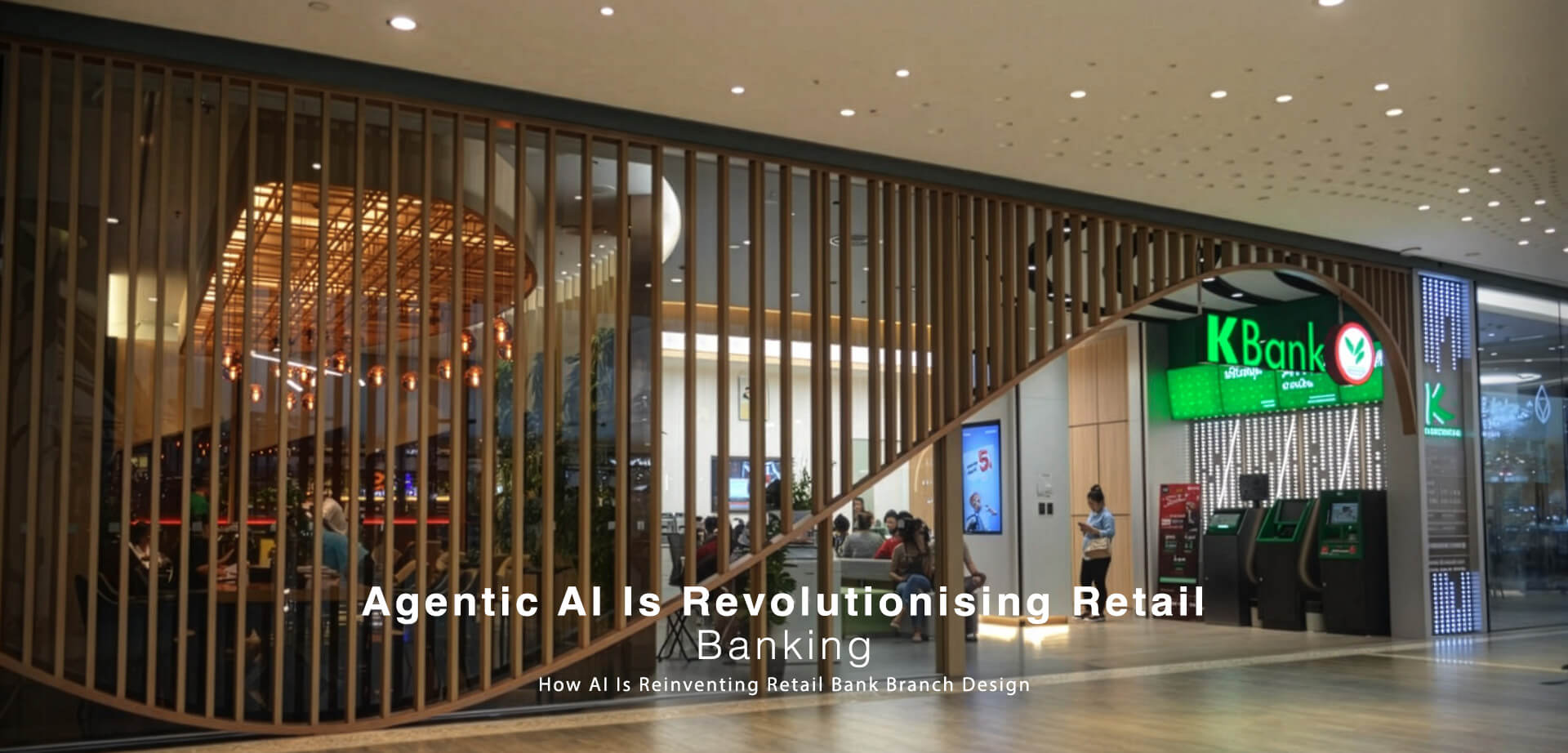
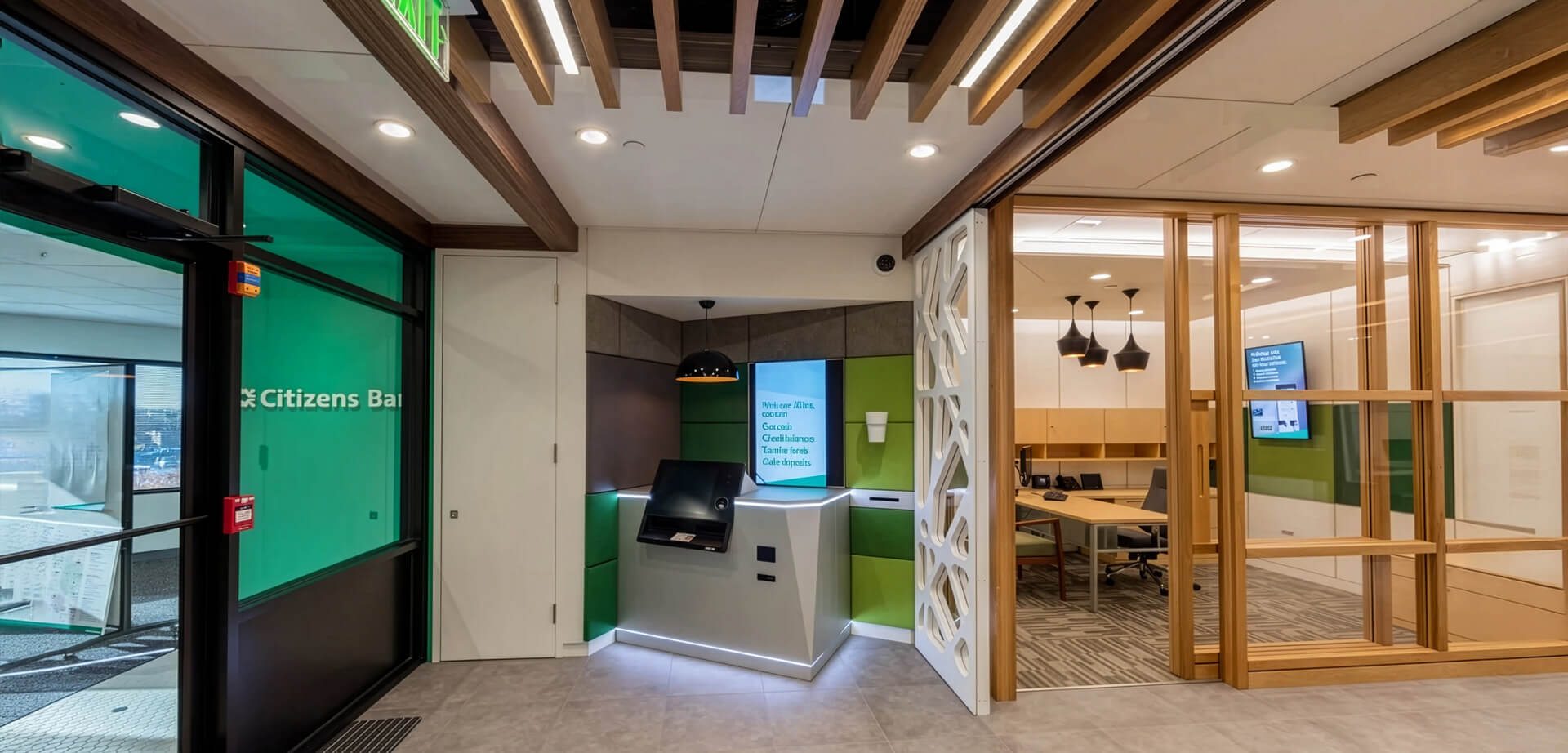
Banks can create AI-enabled consultation spaces, interactive financial education zones, personalised digital interfaces, flexible meeting areas and immersive brand environments. The branch becomes somewhere customers visit to understand, explore and discuss their financial future, not simply complete a transaction.

Branding becomes the experience
This transformation also creates a new challenge for bank brands.
The brand must be recognisable and consistent across the AI assistant, mobile app, website, digital communications and physical branch.
Architecture, interior design, customer journey, signage and technology can no longer operate independently.
They need to become one phygital banking ecosystem

The Future Bank Branch Is an Intelligent Experience Hub
This is where branch design becomes strategically important.
As routine transactions become increasingly automated, physical branches do not necessarily become less relevant.
They can become more valuable.
The reason is simple.
AI can handle many routine interactions remotely. Human beings remain particularly valuable when customers need reassurance, judgement, empathy and expertise.
The branch therefore evolves from a transactional environment into an intelligent customer experience hub.
Why CampbellRigg matters
CampbellRigg brings together banking brand strategy, customer experience, architecture, interior design, digital touchpoints and communications.
For banks planning an AI-enabled branch transformation, this integrated capability can help connect brand strategy with physical experience and technology, creating environments that are distinctive, intuitive and commercially focused.
CampbellRigg's previous banking work demonstrates this approach, including branch experience audits, technology interfaces, consultation zones, personalised advisory areas and integrated brand environments.
The future is intelligent and human
AI will remove friction from banking. Design will determine what replaces it.
The most successful bank branches will not compete with digital banking. They will complement it. using AI for convenience and personalisation while using physical space to build trust, confidence and human relationships.
The future bank branch is not disappearing. It is becoming smarter, more experiential and more valuable.

What Is Agentic Banking?
Agentic banking is an emerging model in which AI agents can understand customer intent, analyse financial information and carry out multi-step banking tasks within defined permissions and human oversight.
Unlike conventional digital banking, where customers navigate menus, forms and separate services themselves, an AI agent can potentially coordinate several stages of a financial journey. The Financial Conduct Authority's 2026 review identifies changing consumer journeys, AI-enabled operations, competition and increased fraud risk as four major shifts for retail financial services. Its research also found that around one in five UK adults, about 11 million people, are likely to use AI that can act autonomously within pre-set goals.
For banking customers, this could mean asking an AI assistant:
1. Which current account best suits my financial needs?
2. Can you compare savings rates and identify a better option?
3. Can you help me prepare for a mortgage application?
4. Which financial products are suitable for my circumstances?
5. Can you identify unusual activity and help protect my account?
6.Can you complete the next steps and tell me when human advice is needed?
7. This changes the starting point of the banking journey.
This changes the starting point of the banking journey.
Instead of: App → search → forms → service → decision
The journey could become: AI intent → personalised recommendation → eligibility → automated processing → human advice where required → fulfilment → proactive financial support
This is not simply a digital transformation. It is a transformation of the banking customer relationship.

AI Agents Are Changing Banking Services
Agentic AI is moving beyond experimentation into specific banking workflows. Bosto Consulting Group says AI agents can automate routine front-office work and complex back-office processes, creating opportunities to redesign onboarding, servicing and credit journeys.
The trend is already visible in live banking services. OCBC's Bank of Singapore and DBS Bank have deployed agentic AI to accelerate private-banking onboarding, reducing account-opening time to 15 business days from an industry median of about six weeks while keeping relationship managers and compliance teams accountable for judgement and decisions.
Fraud prevention is another rapidly developing application. Lloyds Banking Group is deploying multiple AI agents to support real-time fraud teams and plans AI-powered scam assessment during payment journeys.
The result is a new banking service model built around personalisation, proactive support, faster onboarding, intelligent fraud protection, financial guidance and human escalation.

What Happens To The Bank Branch?
As AI handles more product discovery, routine servicing and administrative processes, the physical branch needs a clearer purpose.
If customers can use an AI agent to compare accounts, check eligibility, complete forms or resolve simple service requests remotely, the branch must offer experiences that digital interfaces cannot easily replicate.
That means shifting the emphasis towards:
Advice. Trust. Financial education. Complex decisions. Demonstration. Community. Human reassurance.
The branch can become the physical layer of an intelligent banking ecosystem. A customer may begin with an AI assistant at home, continue through the bank's mobile platform, visit a branch for a complex financial conversation and then return to an AI-enabled digital relationship for ongoing support.

The New Banking Brand Experience
Agentic banking also changes branding. The bank is no longer experienced only through its logo, branch or advertising. The AI assistant itself becomes a brand touchpoint, and potentially the most frequent one.
Banks therefore need to align AI personality, service language, digital interfaces, physical environments and human interactions around one coherent brand experience.
This is where CampbellRigg's integrated banking services can add value. Its capabilities span banking brand strategy, customer experience, branch architecture, interior design, digital touchpoints, customer journeys and communications. By connecting these disciplines, CampbellRigg can help banks translate an AI strategy into a distinctive phygital customer experience across digital and physical channels.

The Future Is AI-Powered, But Still Human
Agentic banking does not mean removing people from banking. It means allowing AI to handle more routine activity while giving people greater capacity for judgement, advice, trust and relationship building.
The banks most likely to benefit will not simply add AI features to existing channels. They will redesign the customer journey, operating model, brand and branch experience around what AI can now make possible.
The future bank is therefore not just an app, an AI assistant or a branch. It is an intelligent, connected ecosystem in which technology, data, human expertise and physical experience work together.